Decorating your home should make your space feel comfortable, beautiful, and functional. However, many homeowners unknowingly make decorating mistakes that can make a room feel cluttered, awkward, unfinished, or unbalanced.
The good news is that most home decor mistakes are easy to fix once you understand the principles behind good design.
Whether you’re decorating your first home, updating a single room, or trying to create a more cohesive interior, this guide will help you identify common home decor mistakes and show you exactly how to correct them.
Why Home Decor Mistakes Happen
Most decorating mistakes occur because people:
- Buy items before making a plan
- Follow trends without considering their space
- Ignore room dimensions
- Overlook scale and proportion
- Focus on individual items instead of the entire room
Professional-looking interiors are usually the result of thoughtful planning rather than expensive purchases.
Mistake #1: Buying Furniture Before Measuring
This is one of the most common decorating mistakes.
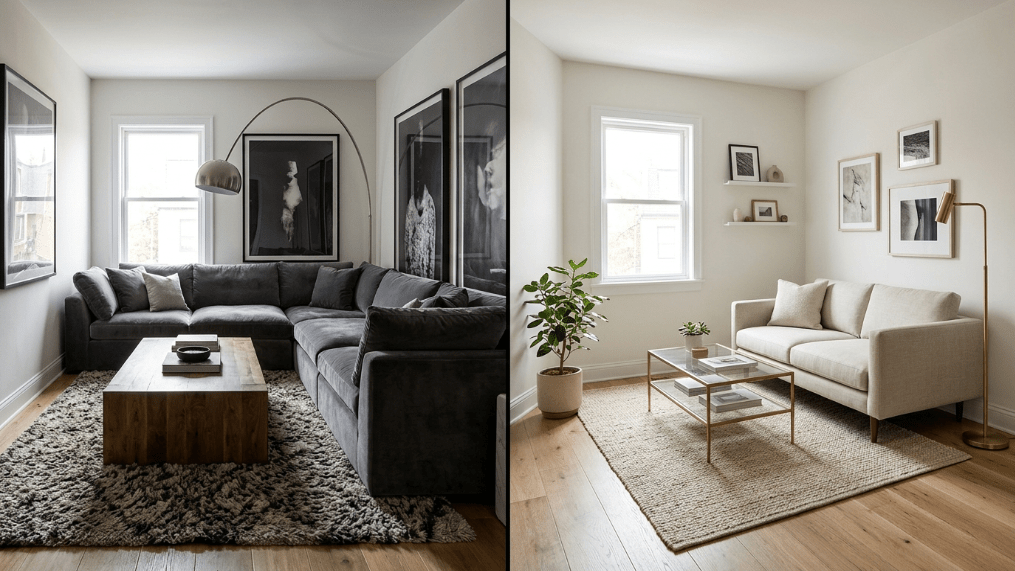
Many people fall in love with a sofa, dining table, or cabinet and purchase it without measuring their room.
The result:
- Furniture feels too large
- Walkways become cramped
- Rooms feel crowded
How to Fix It
Before buying furniture:
Measure:
- Room length
- Room width
- Doorways
- Windows
- Existing furniture
Create a simple floor plan if possible.
A few minutes of measuring can prevent expensive mistakes.
Mistake #2: Choosing a Rug That Is Too Small
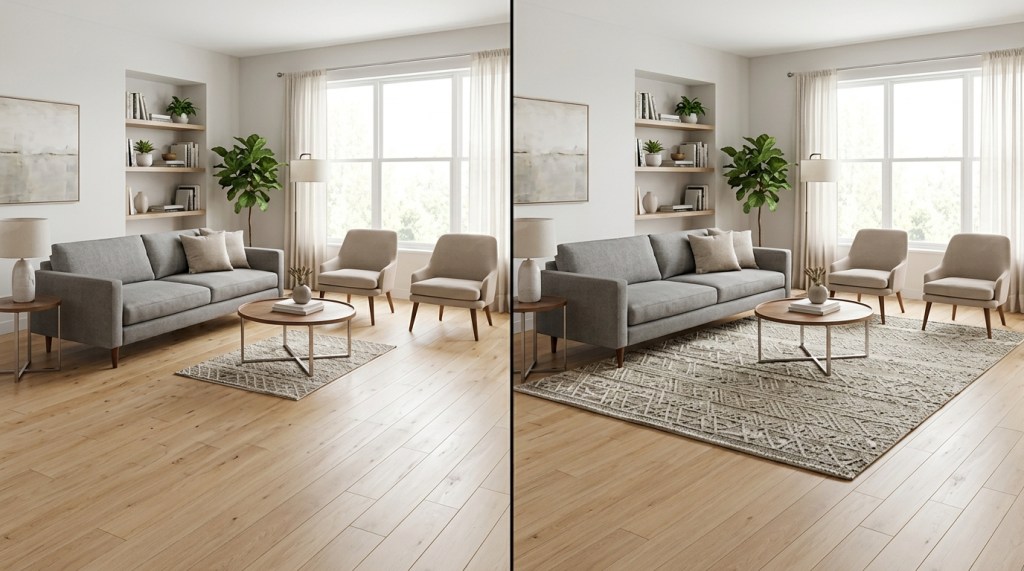
A rug that is too small can make an entire room feel disconnected.
This is one of the most overlooked design mistakes.
Common Example
A tiny rug placed under only the coffee table while all furniture sits outside its boundaries.
The room lacks visual unity.
How to Fix It
Choose a rug large enough to anchor the furniture arrangement.
For living rooms:
- At least the front legs of major furniture pieces should sit on the rug.
Larger rugs generally create a more balanced appearance.
Mistake #3: Hanging Artwork Too High
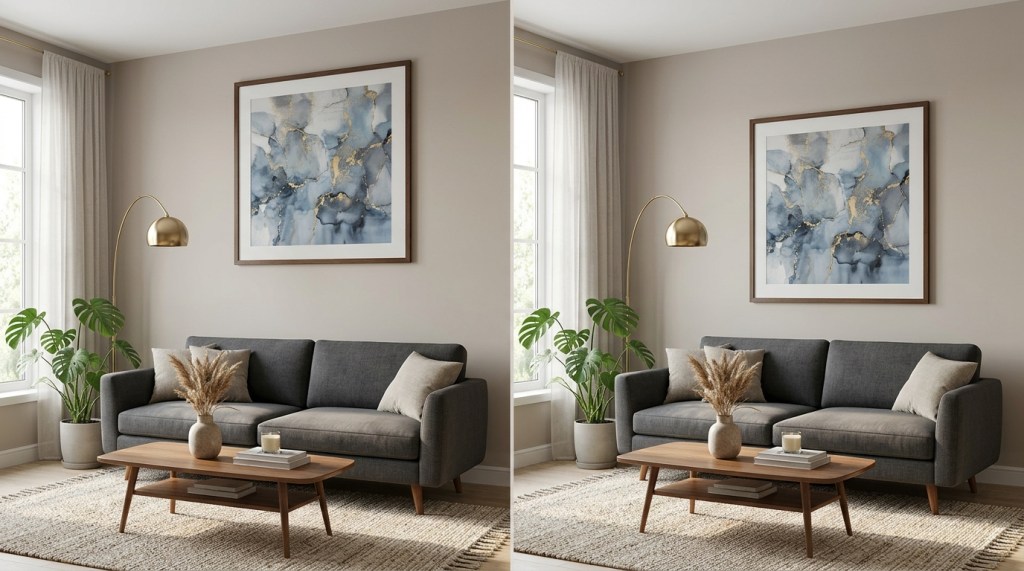
Artwork is often placed far above eye level.
This creates a disconnect between the wall decor and the furniture below it.
How to Fix It
A good guideline:
Hang artwork so the center is approximately at eye level.
For artwork above furniture:
Leave about 6–10 inches of space between the furniture and the artwork.
This creates visual connection.
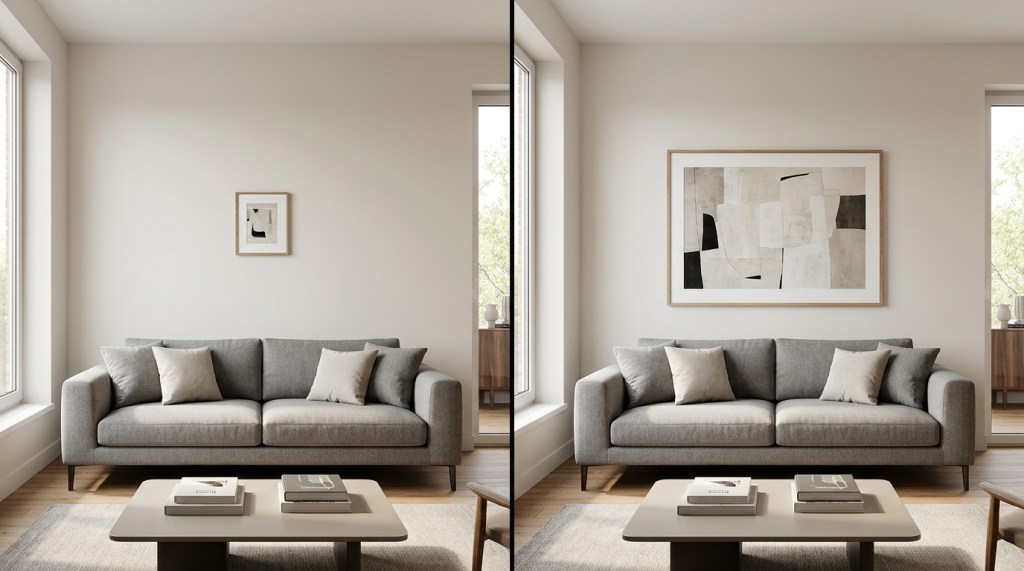
Mistake #4: Choosing Wall Art That Is Too Small
Many homeowners select artwork that is significantly smaller than the wall it occupies.
The wall feels empty and unfinished.
How to Fix It
Artwork should generally fill about 60%–75% of the available wall space.
Alternative solutions include:
- Oversized artwork
- Gallery walls
- Multiple coordinated pieces
Properly scaled wall art creates balance.
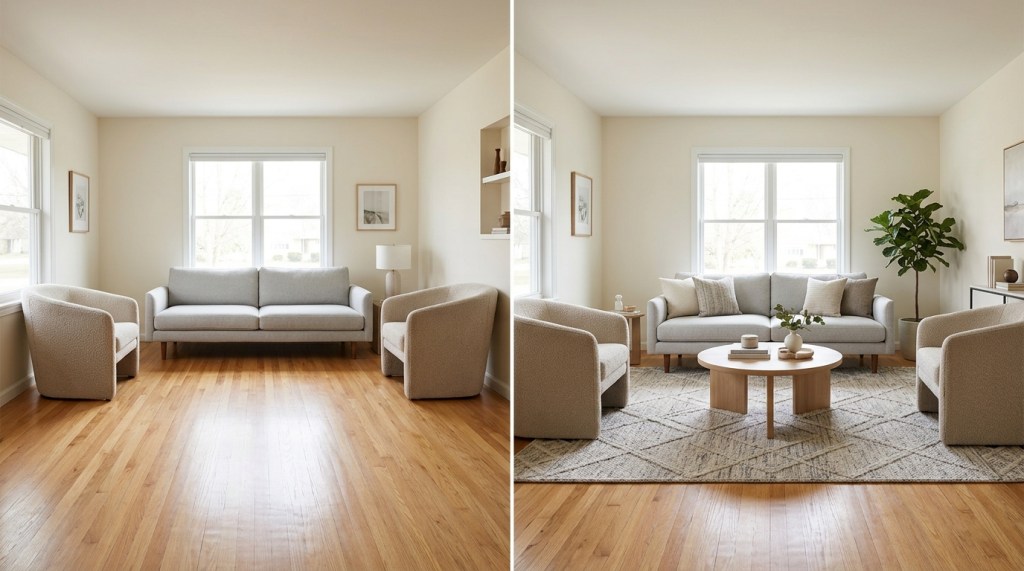
Mistake #5: Pushing All Furniture Against the Walls
Many people assume this makes a room feel larger.
In reality, it often creates awkward empty space in the cente
How to Fix It
Pull furniture slightly inward when possible.
Examples:
- Float sofas away from walls
- Create conversation areas
- Use rugs to define zones
This often makes rooms feel more intentional and inviting.
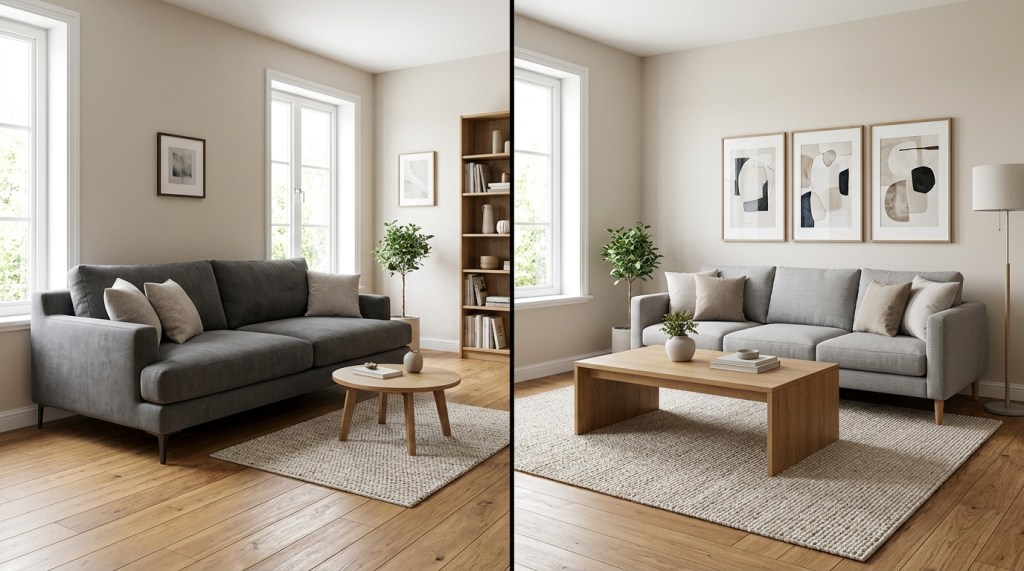
Mistake #6: Ignoring Scale and Proportion
Even beautiful furniture can look wrong when the sizes don’t work together.
Examples:
- Tiny coffee table with oversized sectional
- Massive chandelier in a small room
- Small artwork on a large wall
How to Fix It
Consider:
- Furniture size relative to the room
- Decor size relative to furniture
- Visual balance between objects
For a deeper understanding, read:
Understanding Scale & Proportion in Interior Design
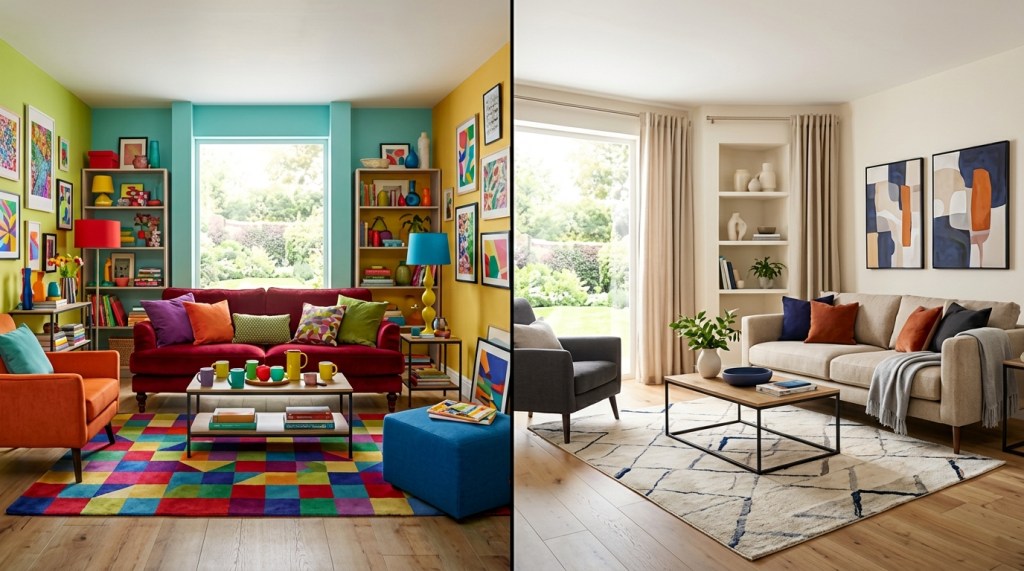
Mistake #7: Using Too Many Colors
A room filled with unrelated colors can feel chaotic.
Without a clear color strategy, visual harmony disappears.
How to Fix It
Choose:
- 2–3 primary colors
- 1–2 accent colors
Repeat these colors throughout the room.
Consistency creates cohesion.
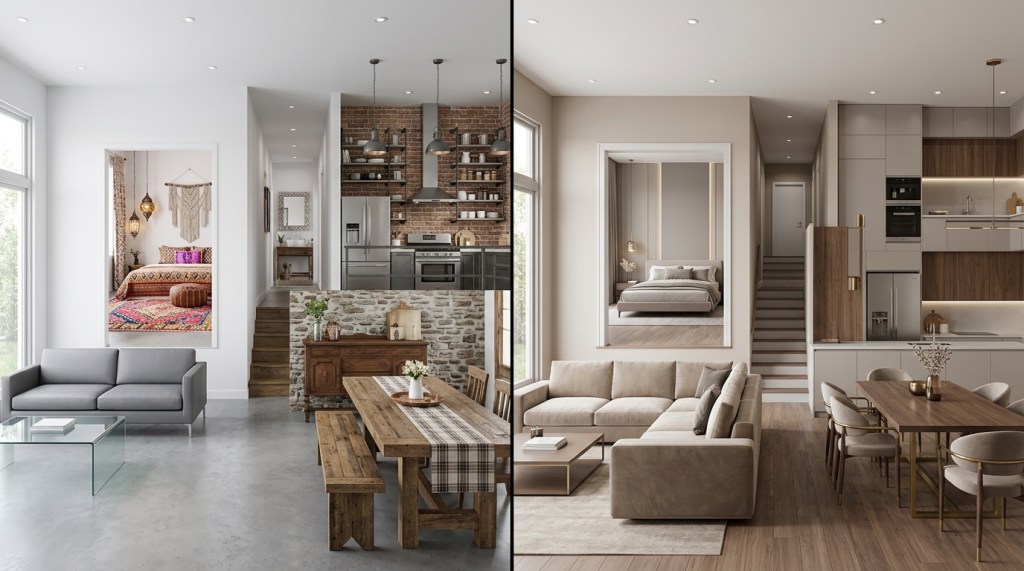
Mistake #8: Decorating Every Room Separately
Many homeowners design each room independently.
As a result:
- The living room feels modern
- The dining room feels traditional
- The bedroom feels completely unrelated
The home lacks flow.
How to Fix It
Create a whole-home design plan.
Repeat:
- Colors
- Materials
- Textures
- Decorative themes
For more guidance, read:
How to Create a Cohesive Look Across Your Home
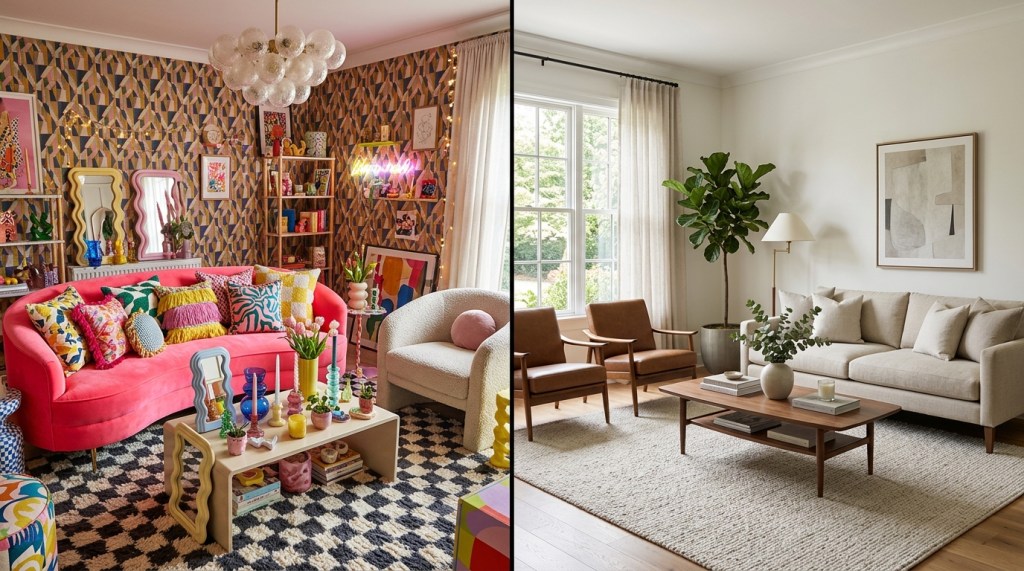
Mistake #9: Following Trends Too Closely
Trends can be inspiring, but decorating entirely around trends often leads to regret.
Styles change quickly.
How to Fix It
Use trends in smaller, replaceable items:
Examples:
- Cushions
- Throws
- Decorative accessories
- Artwork
Keep major purchases more timeless.
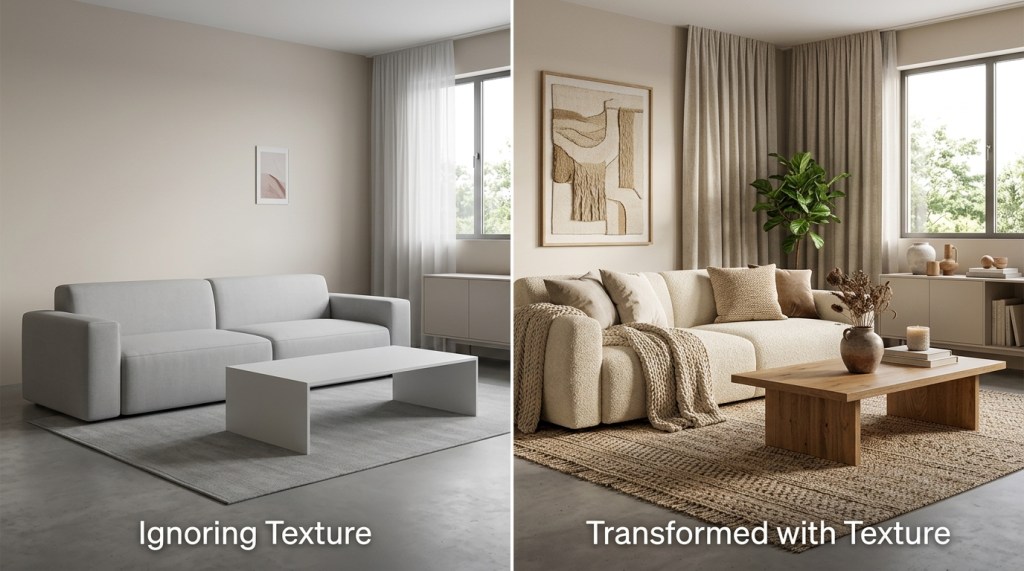
Mistake #10: Ignoring Texture
A room can have perfect furniture and colors yet still feel flat.
This usually happens when texture is missing.
How to Fix It
Layer different materials:
Examples:
- Wood
- Fabric
- Metal
- Glass
- Natural fibers
Texture adds warmth and depth.
For more information, read:
Texture in Home Decor: How Wood, Metal, Fabric, and Other Materials Transform a Space
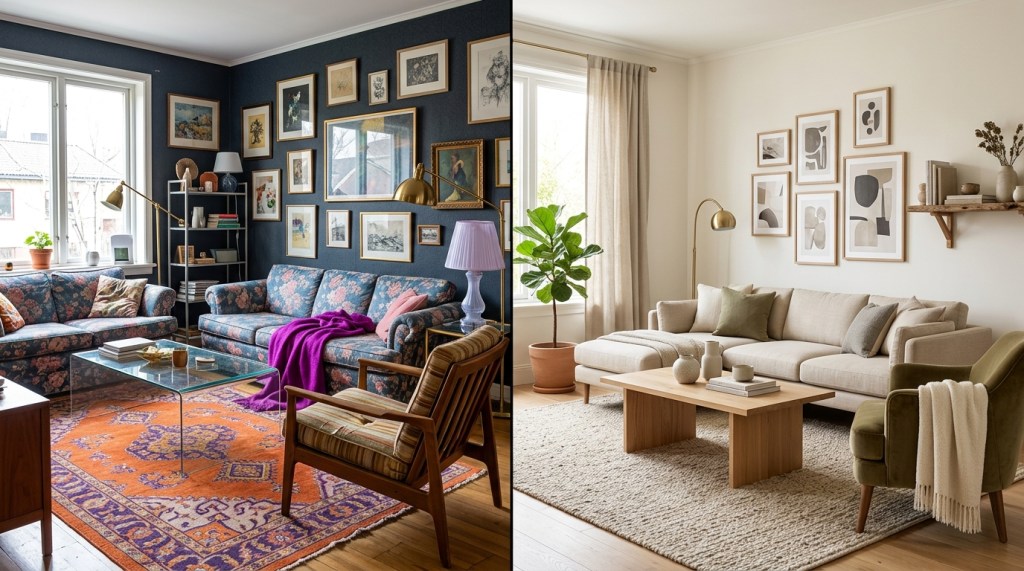
Mistake #11: Overdecorating
Many beginners believe more decor automatically means a better room.
The opposite is often true.
Too many accessories create:
- Visual clutter
- Stress
- Reduced functionality
How to Fix It
Focus on quality over quantity.
Choose fewer decorative pieces that:
- Have meaning
- Add beauty
- Support the room’s style
Allow some empty space.
Visual breathing room is important.
Mistake #12: Underdecorating Large Rooms
Large spaces often feel cold and unfinished when there isn’t enough visual weight.
How to Fix It
Use:
- Larger furniture
- Larger rugs
- Oversized artwork
- Multiple seating areas
Large rooms require larger design elements.
Mistake #13: Poor Lighting Choices
Many rooms rely on a single ceiling fixture.
This often creates harsh shadows and an uninviting atmosphere.
How to Fix It
Layer lighting using:
Ambient Lighting
General room illumination.
Task Lighting
Reading and work lighting.
Accent Lighting
Decorative and mood lighting.
Multiple light sources create a more comfortable environment.
Mistake #14: Choosing Style Before Function
Sometimes people prioritize appearance over practicality.
Examples:
- Beautiful but uncomfortable seating
- Delicate materials in high-traffic areas
- Furniture that restricts movement
How to Fix It
Always consider:
- Daily use
- Lifestyle needs
- Maintenance requirements
Good design balances beauty and functionality.
Mistake #15: Buying Decor Without a Plan
Impulse purchases often lead to rooms that feel disconnected.
How to Fix It
Before buying:
Ask yourself:
- Does this fit my style?
- Does it fit my color palette?
- Does it fit the room size?
- Does it improve the space?
Planning saves money and prevents clutter.
The Most Important Home Decor Rule
If you remember only one thing from this guide, remember this:
Every item should support the room as a whole.
Avoid evaluating furniture, artwork, rugs, and accessories individually.
Instead, consider how they work together.
Great rooms are created through relationships between elements.
How These Mistakes Relate to Other Design Principles
Many decorating mistakes can be avoided by understanding:
- Scale and proportion
- Balance and symmetry
- Texture
- Color
- Cohesion
To strengthen your decorating knowledge, read:
- What Is Home Decor? A Complete Beginner’s Guide
- How to Choose a Home Decor Style
- Understanding Scale & Proportion in Interior Design
- Balance & Symmetry: Why Some Rooms Feel “Off”
- How to Mix Furniture Styles Without Clashing
- Choosing Decor Based on Room Size
- Texture in Home Decor
- How to Create a Cohesive Look Across Your Home
The Bottom Line
Together, these guides provide a strong foundation for successful decorating
Every beautifully decorated home starts with learning what works and what doesn’t. The good news is that most home decor mistakes are not permanent. Small changes in furniture placement, artwork sizing, color choices, lighting, and texture can dramatically improve a room.
The goal isn’t perfection—it’s creating spaces that feel comfortable, functional, and reflective of your personal style.
By avoiding these common mistakes and applying the principles you’ve learned throughout this series, you’ll be well on your way to creating a home that looks balanced, cohesive, and professionally designed.
This post is part of our Home Decor Guidance Series. In the next guide, we’ll explore Color Psychology in Home Decor: How Different Colors Influence Mood and Atmosphere, helping you choose colors that support the purpose and feeling of every room.


Leave a comment