
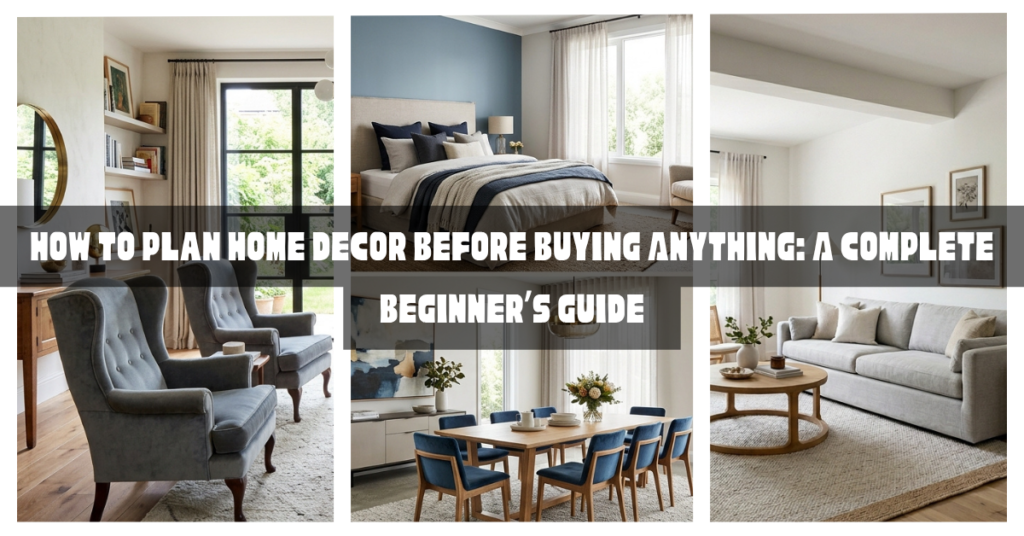
How to plan home decor is one of the most important steps before buying furniture or decorations. A good decorating plan helps you save money, avoid costly mistakes, and create a beautiful home that matches your style and budget.One of the biggest mistakes homeowners make is buying furniture, wall art, rugs, and decorative accessories before creating a plan. A beautiful item may look perfect in a store or online, but once it arrives at home, it may not fit the space, match the existing decor, or contribute to the overall design.
Successful home decor starts long before you make your first purchase. Planning helps you avoid costly mistakes, create a cohesive look, and make better decorating decisions.
This guide explains How to Plan Home Decor step by step.In this guide, you’ll learn exactly how to plan your home decor before buying anything so your home feels intentional, balanced, and beautifully designed.Beginners should know How to Plan Home Decor before buying furniture.
Why Planning Matters
Learning How to Plan Home Decor saves money. Many decorating problems happen because purchases are made impulsively.
Without a plan, you may end up with:
- Furniture that doesn’t fit the room
- Clashing colors and styles
- Overspending
- Unused decorative items
- Rooms that feel disconnected
Planning helps ensure every purchase supports your overall vision.
Step 1: Define Your Purpose for the Room
Before selecting furniture or decor, ask yourself:
What Is This Room Used For?
Examples:
- Relaxation
- Entertainment
- Working from home
- Dining
- Sleeping
- Family activities
The room’s function should guide every decorating decision.
Example
A family living room may require:
- Comfortable seating
- Durable materials
- Easy-to-clean surfaces
A formal sitting room may prioritize appearance over heavy daily use.
Understanding the room’s purpose helps establish priorities.
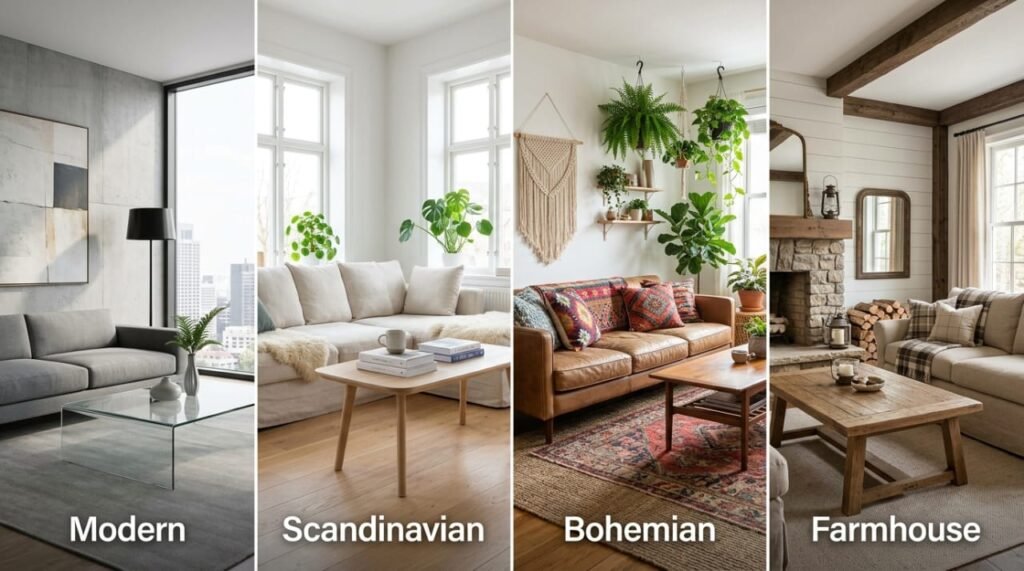
Step 2: Identify Your Home Decor Style
One of the first decisions in any decorating project is choosing a style.
How to Plan Home Decor before shopping is important.Your style influences:
- Furniture choices
- Color palettes
- Wall decor
- Materials
- Lighting
Common styles include:
- Modern
- Minimalist
- Scandinavian
- Traditional
- Boho
- Rustic
If you’re unsure which style suits you, read:
How to Choose a Home Decor Style
This guide will help you identify your preferred decorating direction.
Step 3: Create a Vision Board
A vision board helps organize your ideas before spending money.
You can use:
- Canva
- Mood board apps
- Physical magazine cutouts
Collect images that inspire you.
Look for patterns in:
- Colors
- Furniture styles
- Textures
- Lighting
- Decorative accessories
This process often reveals your design preferences more clearly than you expect.
Step 4: Measure Everything
Many decorating mistakes begin with inaccurate measurements.
Before buying anything, measure:
Room Dimensions
- Length
- Width
- Ceiling height
Architectural Features
- Doors
- Windows
- Built-ins
- Fireplaces
Existing Furniture
Measure furniture you plan to keep.
Knowing these dimensions helps you create an accurate layout.
Step 5: Establish a Budget
Decorating costs can quickly escalate without a budget.
Create a realistic spending plan.
Divide Your Budget Into Categories
Examples:
Major Purchases
- Sofa
- Dining table
- Bed
Secondary Purchases
- Rugs
- Lighting
- Accent furniture
Decorative Accessories
- Artwork
- Plants
- Pillows
- Decorative objects
Budgeting helps prioritize purchases and prevent overspending.
Step 6: Start With the Largest Pieces First
Large furniture establishes the foundation of a room.
Examples include:
- Sofas
- Beds
- Dining tables
- Storage units
These items influence everything else.
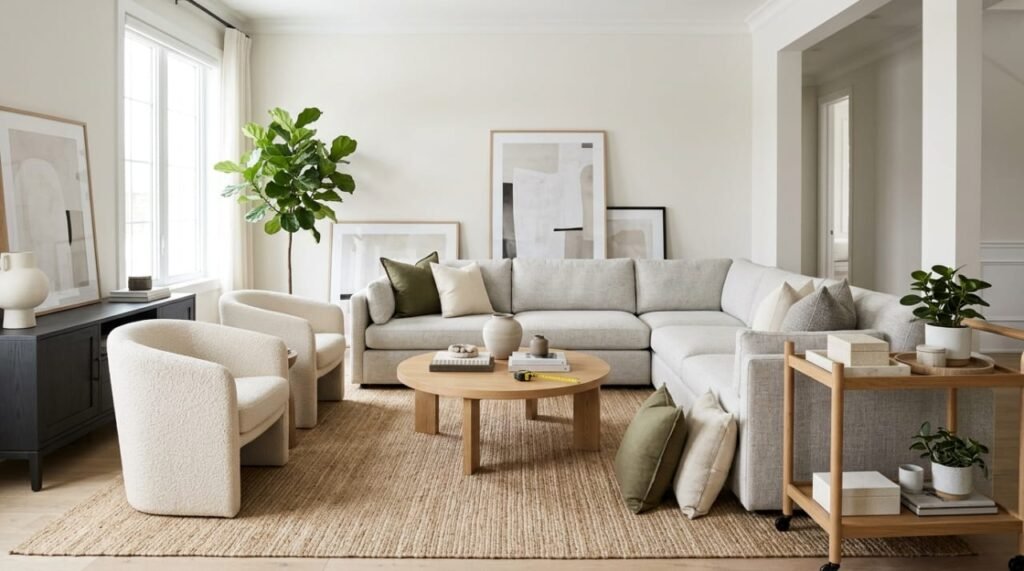
Why This Matters
It is easier to find:
- Artwork for a sofa
- Rugs for a sofa
- Cushions for a sofa
Than it is to find a sofa that perfectly matches random accessories you’ve already purchased.
Build from large pieces downward.
Step 7: Plan Your Layout Before Shopping
Furniture arrangement affects:
- Traffic flow
- Comfort
- Functionality
- Visual balance
Create a Simple Floor Plan
You can:
- Draw by hand
- Use online room planners
- Use interior design apps
This helps determine:
- Furniture sizes
- Placement options
- Available space
Planning prevents costly purchasing mistakes.
Step 8: Choose a Color Palette
A consistent color palette creates cohesion throughout your home.
Simple Formula
Primary Colors (2–3)
Examples:
- White
- Beige
- Gray
Accent Colors (1–2)
Examples:
- Navy blue
- Olive green
- Terracotta
Using a limited palette makes decorating easier and more harmonious.
Step 9: Consider Scale and Proportion
Beautiful furniture can still look wrong if it’s improperly sized.
Always evaluate:
- Furniture relative to room size
- Artwork relative to wall size
- Lighting relative to furniture
If you’re unfamiliar with these concepts, read:
Understanding Scale & Proportion in Interior Design
This principle can dramatically improve decorating decisions.
Step 10: Think About Balance
Before purchasing decor, imagine how visual weight will be distributed.
Examples of visual weight:
- Dark colors
- Large furniture
- Bold artwork
- Heavy materials
Rooms feel best when visual weight is balanced.
For more information, read:
Balance & Symmetry: Why Some Rooms Feel “Off” (Post #4)
Step 11: Plan Your Textures
Texture adds warmth and depth.
Before shopping, consider which materials you want to include.
Examples:
- Wood
- Metal
- Glass
- Linen
- Wool
- Leather
A thoughtful mix of textures creates a more interesting space.
For deeper insight, read:
Step 12: Prioritize Function Before Decoration
Many people focus on decorative details too early.
Instead, establish:
- Furniture
- Layout
- Storage
- Lighting
First.
Decorative accessories should support the room—not define it.
Step 13: Create a Purchase Priority List
Not everything must be purchased immediately.
Create three categories.
Must-Have Items
Examples:
- Sofa
- Bed
- Dining table
These are essential.
Nice-to-Have Items
Examples:
- Accent chairs
- Side tables
- Decorative lighting
These can wait if necessary.
Decorative Finishing Touches
Examples:
- Artwork
- Plants
- Decorative accessories
Purchase these last.
Step 14: Avoid Impulse Purchases
One of the fastest ways to create a cluttered home is buying items simply because they’re attractive.
Before purchasing, ask:
Does It Fit My Style?
Does It Fit My Color Palette?
Does It Fit My Budget?
Does It Fit My Room Size?
Does It Support My Overall Design Plan?
If not, reconsider the purchase.
Step 15: Think About the Whole Home
Decorating one room at a time is fine, but each room should relate to the rest of the home.
Consider:
- Shared colors
- Similar materials
- Consistent design language
For more guidance, read:
How to Create a Cohesive Look Across Your Home
A connected home feels more polished and professional.
Common Planning Mistakes to Avoid
Buying Before Measuring
Leads to scale problems.
Ignoring Budget Limits
Creates unnecessary financial stress.
Following Trends Blindly
Trends come and go.
Build around timeless foundations.
Purchasing Decor Before Furniture
Often creates design challenges later.
Skipping the Layout Phase
Can result in poor furniture arrangements.
How This Fits Into Your Home Decor Journey
Successful decorating isn’t about buying expensive items.
It’s about understanding:
- Style
- Scale
- Balance
- Texture
- Cohesion
- Planning
For a complete foundation, read:
For more home decorating inspiration and expert advice, visit Better Homes & Gardens.
- What Is Home Decor? A Complete Beginner’s Guide
- How to Choose a Home Decor Style
- Understanding Scale & Proportion in Interior Design
- Balance & Symmetry: Why Some Rooms Feel “Off”
- How to Mix Furniture Styles Without Clashing
- Choosing Decor Based on Room Size
- Texture in Home Decor
- How to Create a Cohesive Look Across Your Home
- Common Home Decor Mistakes (And Fixes)
Together, these guides provide a complete beginner-friendly roadmap to decorating with confidence.
The Bottom line
The most successful home decor projects begin with planning, not shopping. Taking time to define your style, measure your space, establish a budget, and create a design strategy will save money, reduce stress, and lead to better decorating results.
Remember, every item in your home should contribute to a larger vision. When purchases are made intentionally rather than impulsively, your home naturally becomes more cohesive, functional, and beautiful.
This post concludes the foundational section of our Home Decor Guidance Series. In the next phase, we’ll begin exploring advanced topics such as color psychology, wall decor strategies, furniture arrangement, room-specific decorating guides, and professional styling techniques.”How to Plan Home Decor”Learning How to Plan Home Decor saves money.
Pingback: Color Psychology in Home Decor: How Colors Affect Mood and Atmosphere – Modern & Trendy Home Decor Vibes
Pingback: Best Colors for Living Rooms: Creating Comfort and Style – Modern & Trendy Home Decor Vibes
Pingback: Best Bedroom Colors for Better Sleep and Relaxation – Modern & Trendy Home Decor Vibes
Pingback: 5 Cozy Chairs for Reading: Top Comfort Picks for 2026