
One of the biggest differences between a professionally designed home and a randomly decorated one is cohesion. A cohesive home feels connected, intentional, and harmonious from room to room.
Many homeowners make the mistake of decorating each room separately without considering how those spaces relate to one another. As a result, the living room may feel modern, the dining room traditional, and the bedroom completely unrelated.
The goal isn’t to make every room look identical. Instead, it’s about creating a sense of flow that makes your home feel unified while still allowing each room to have its own personality.
In this guide, you’ll learn how to create a cohesive look throughout your home without making it feel repetitive or boring.
What Does a Cohesive Home Mean?
A cohesive home is one where all spaces feel connected through shared design elements.
These elements may include:
- Color palettes
- Furniture styles
- Materials
- Textures
- Decorative accents
- Lighting choices
When cohesion is present, moving from one room to another feels natural and comfortable.
Why Cohesion Matters in Home Decor
Creating a cohesive home offers several benefits.
Improves Visual Flow
Rooms feel connected rather than isolated.
Makes Spaces Feel Larger
Consistency helps the eye move smoothly throughout the home.
Creates a Professional Appearance
Many professionally designed homes rely heavily on cohesive design principles.
Simplifies Decorating Decisions
A clear design direction makes future purchases easier.
Increases Comfort
Balanced and harmonious interiors often feel more relaxing.
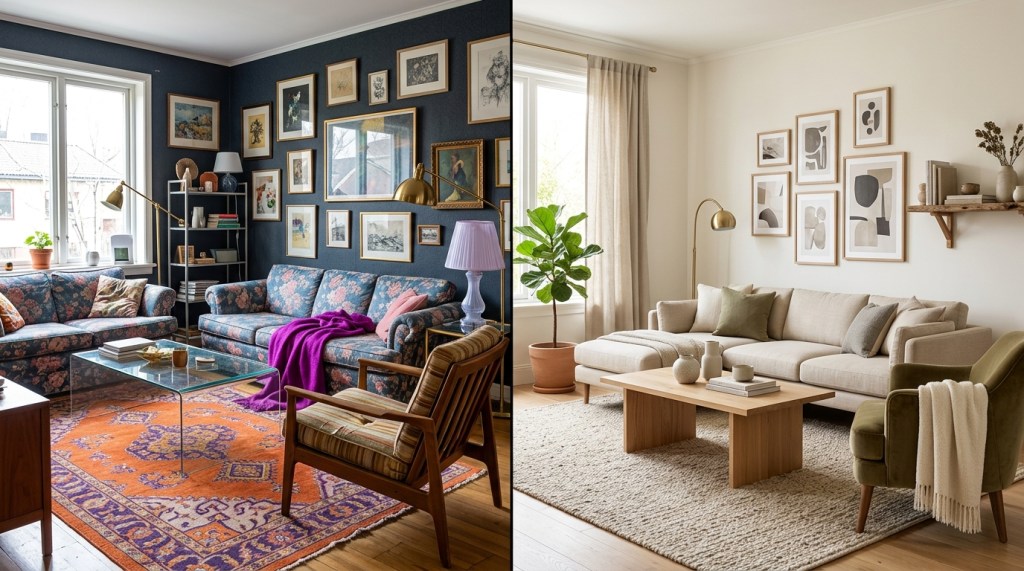
Start With a Clear Home Decor Style
Before creating cohesion, you need a general design direction.
Ask yourself:
- Do I prefer modern interiors?
- Am I drawn to Scandinavian spaces?
- Do I love boho decor?
- Do I prefer traditional elegance?
You don’t need to follow one style perfectly, but having a primary style creates a strong foundation.
If you haven’t already, read:
How to Choose a Home Decor Style
This guide will help you identify your decorating preferences.
Choose a Consistent Color Palette
Color is one of the easiest ways to connect multiple rooms.
A cohesive home doesn’t require every room to be the same color, but the colors should relate to one another.
Create a Whole-Home Color Scheme
Choose:
Primary Colors (2–3)
Examples:
- White
- Beige
- Gray
These colors appear throughout most rooms.
Accent Colors (1–3)
Examples:
- Navy blue
- Sage green
- Terracotta
Accent colors provide personality while maintaining consistency.
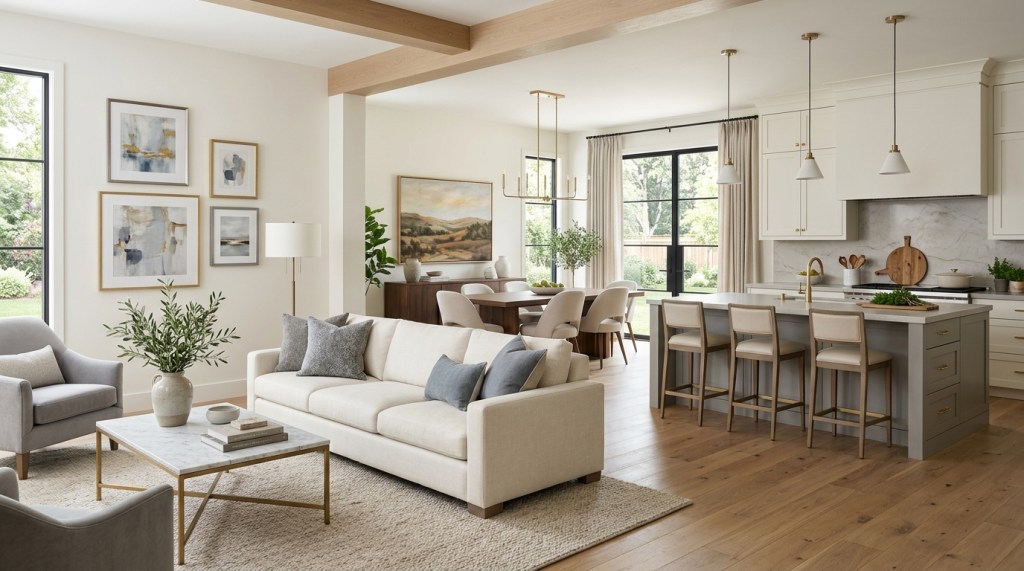
Repeat Colors Throughout the Home
For example:
If navy blue appears in the living room, consider repeating it through:
- Bedroom cushions
- Artwork
- Decorative accessories
This repetition creates visual continuity.
Use Similar Materials Throughout the Home
Materials play a major role in creating cohesion.
Common materials include:
- Wood
- Metal
- Glass
- Stone
- Fabric
You don’t need identical materials everywhere, but repeating them helps tie spaces together.
Example
If your living room includes warm oak furniture:
Consider using:
- Oak dining chairs
- Oak shelving
- Oak picture frames
The repeated material creates a subtle connection.
Maintain Consistent Flooring
Flooring naturally connects rooms.
Whenever possible:
Use consistent flooring throughout main living areas.
Examples:
- Hardwood flooring
- Luxury vinyl plank
- Large-format tile
Continuous flooring helps homes feel larger and more cohesive.
Repeat Design Elements
Repeating specific design details strengthens visual unity.
Examples include:
- Similar frame styles
- Matching hardware finishes
- Consistent curtain styles
- Repeated decorative motifs
These small details often make a significant difference.
Create Cohesion Through Texture
Texture helps connect spaces while adding depth and warmth.
Examples:
- Wood furniture
- Linen curtains
- Woven baskets
- Wool rugs
If you haven’t already, read:
Texture in Home Decor: How Wood, Metal, Fabric, and Other Materials Transform a Space
Understanding texture makes it easier to create a cohesive home.
Keep Furniture Styles Related
A common misconception is that every furniture piece must match.
Instead:
Aim for compatibility.
Example
You might combine:
- Modern sofa
- Rustic coffee table
- Contemporary lighting
The room remains cohesive because the styles complement one another.
If you’re unsure how to mix furniture successfully, read:
How to Mix Furniture Styles Without Clashing
Use Consistent Lighting Styles
Lighting is often overlooked when creating cohesion.
Try to maintain a similar design language throughout the home.
Examples:
Modern Home
- Clean-lined pendants
- Minimalist lamps
- Sleek fixtures
Traditional Home
- Decorative chandeliers
- Classic table lamps
- Elegant wall sconces
Lighting should support your overall design direction.
Connect Rooms Through Wall Decor
Wall art can act as a visual bridge between spaces.
You don’t need identical artwork, but maintaining consistency helps.
Consider Similarities Such As:
- Frame color
- Art style
- Color palette
- Subject matter
For example:
A home featuring nature-inspired artwork throughout multiple rooms often feels connected.
Give Each Room Its Own Personality
Cohesion does not mean every room should look the same.
Each room should have a unique purpose and character.
Living Room
May feel social and inviting.
Bedroom
May feel calm and relaxing.
Home Office
May feel focused and productive.
The key is maintaining shared design elements while adjusting details to suit each room’s function.
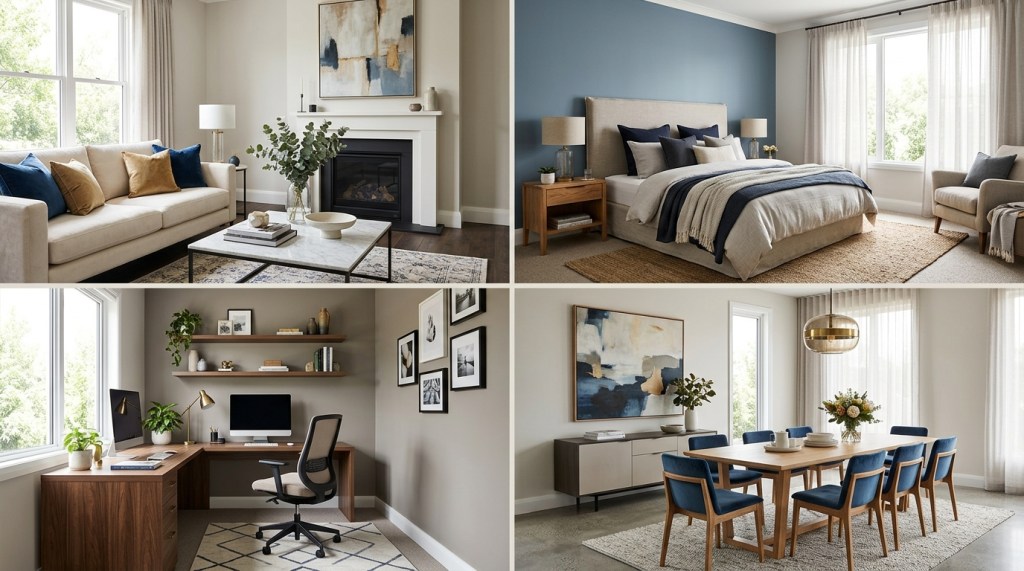
Create Visual Flow Between Adjacent Rooms
Open-concept layouts especially benefit from strong cohesion.
When two rooms are visible at the same time:
- Repeat colors
- Use compatible furniture styles
- Coordinate materials
- Maintain similar visual weight
This prevents spaces from competing with one another.
Use Decorative Accessories Thoughtfully
Accessories help reinforce your home’s overall theme.
Examples:
- Vases
- Candles
- Plants
- Decorative trays
- Books
Repeating similar accessory styles throughout the home strengthens cohesion.
Avoid These Common Mistakes
1. Decorating Every Room Independently
This often creates disconnected spaces.
2. Using Too Many Styles
Limit yourself to one primary style and one secondary influence.
3. Ignoring Color Relationships
Random colors can disrupt visual flow.
4. Buying Furniture Without a Plan
Impulse purchases often weaken cohesion.
5. Overmatching Everything
Too much matching can feel artificial and boring.
Balance consistency with variety.
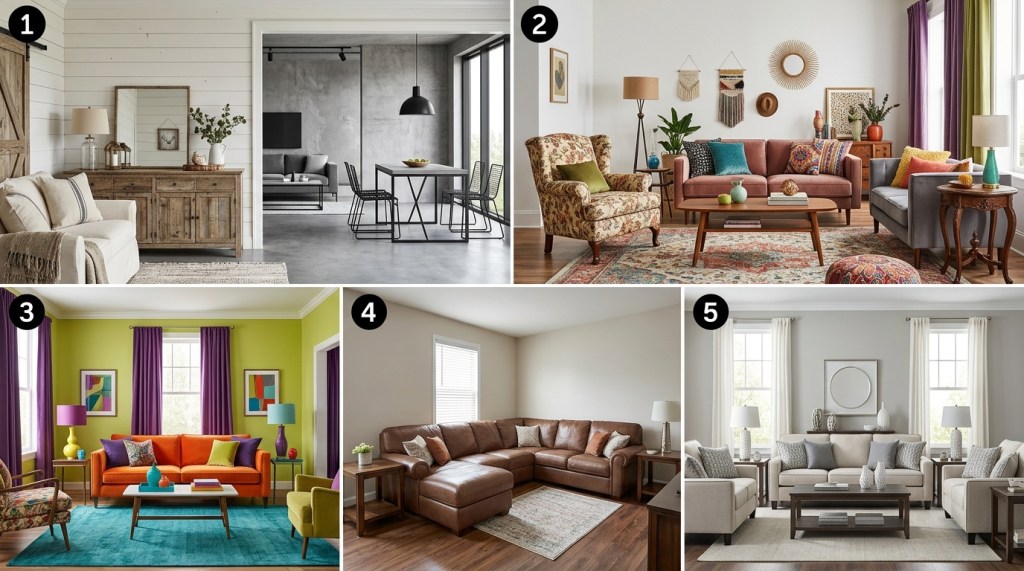
How Scale and Balance Support Cohesion
A cohesive home also requires consistency in:
- Scale
- Proportion
- Balance
Large furniture in one room and tiny furniture in another can disrupt flow.
For deeper understanding, read:
These principles help unify spaces visually.
A Simple Formula for a Cohesive Home
Many designers follow this approach:
Repeat:
- Colors
- Materials
- Textures
- Lighting styles
- Decorative themes
Vary:
- Room function
- Accent pieces
- Artwork
- Decorative details
This balance creates harmony without monotony.
How This Fits Into Your Home Decor Journey
Creating a cohesive home becomes much easier when you first understand:
- What home decor is
- Your preferred decorating style
- Scale and proportion
- Balance and symmetry
- Texture and materials
If you’re new to decorating, start with:
What Is Home Decor? A Complete Beginner’s Guide
This foundational guide supports every decorating decision you’ll make.
The Bottom Line
A cohesive home doesn’t happen by accident. It is created through intentional choices that connect rooms through color, materials, texture, style, and visual flow.
The goal is not perfection or matching every item. Instead, focus on creating relationships between spaces so your home feels unified, comfortable, and thoughtfully designed.
By repeating key design elements while allowing each room its own personality, you can create a home that feels both harmonious and uniquely yours.


Leave a comment