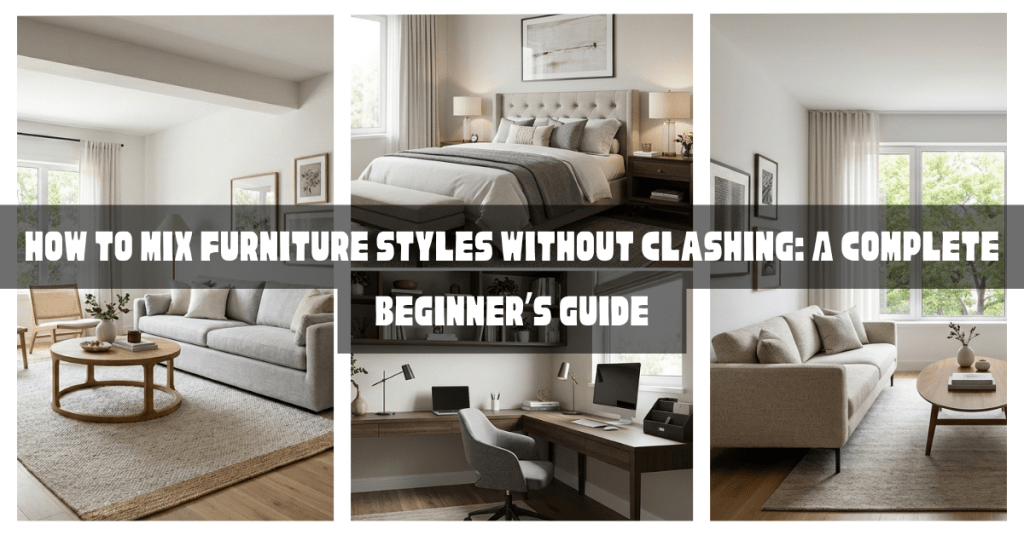
One of the biggest misconceptions in home decor is that all furniture must come from the same collection or follow the same style. In reality, some of the most beautiful and professionally designed homes combine different furniture styles to create unique, personalized spaces.
The challenge is knowing how to mix styles without making a room feel chaotic or mismatched.
When done correctly, mixing furniture styles adds character, depth, and visual interest. When done poorly, it can make a room feel confusing and unbalanced.
In this guide, you’ll learn how to combine furniture styles confidently while maintaining a cohesive and harmonious look.
Why Mix Furniture Styles?
Many homeowners naturally collect furniture over time. You may already own:
- A modern sofa
- A traditional coffee table
- A vintage cabinet
- Contemporary lighting
Instead of replacing everything, learning how to mix styles allows you to:
- Create a more personalized home
- Save money
- Add visual interest
- Avoid a showroom-like appearance
- Develop a unique design identity
Rooms that combine styles often feel more authentic and lived-in than rooms filled with matching furniture.
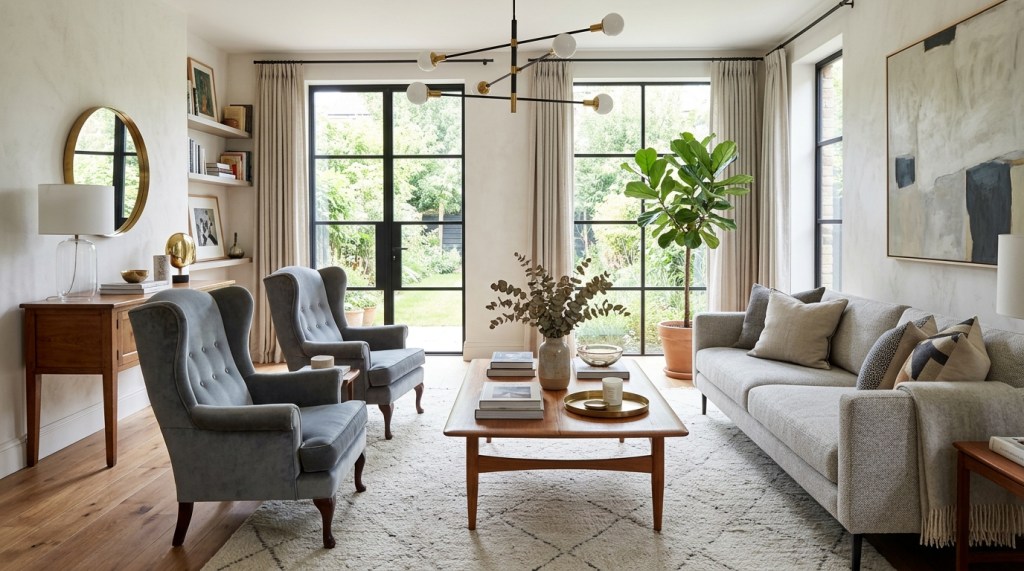
The Biggest Mistake People Make
Many beginners think mixing furniture styles means combining random pieces.
This often results in:
- Visual clutter
- Lack of direction
- Conflicting colors
- Competing focal points
Successful mixing is intentional, not accidental.
The goal is harmony, not uniformity.
Start With One Dominant Style
The easiest way to mix furniture successfully is to choose one primary style.
Think of this as the foundation of the room.
For example:
Modern-Dominant Room
- 70% modern furniture
- 30% traditional or vintage accents
Traditional-Dominant Room
- 70% traditional furniture
- 30% modern pieces
This creates balance while allowing variety.
The 70/30 Rule
Interior designers often use the 70/30 rule when mixing styles.
How It Works
- 70% = Primary style
- 30% = Secondary style
Example
A living room may include:
70% Modern
- Modern sofa
- Modern TV unit
- Modern coffee table
30% Traditional
- Vintage side table
- Traditional artwork
- Antique accessories
This prevents styles from competing with each other.
Use a Consistent Color Palette
Color is one of the most powerful tools for creating unity.
Even very different furniture styles can work together if they share similar colors.
Example
A room may contain:
- Modern gray sofa
- Traditional wood side table
- Rustic bookshelf
These pieces can feel cohesive if they share a similar color palette.
Recommended Approach
Choose:
- 2–3 primary colors
- 1–2 accent colors
Then repeat those colors throughout the room.
Consistency creates harmony.
Match Furniture Scale and Proportion
Different furniture styles can work together, but they should still feel balanced in size.
Good Example
- Medium-sized modern sofa
- Medium-sized vintage armchair
- Proportional coffee table
Poor Example
- Oversized traditional cabinet
- Tiny modern sofa
The room feels visually unbalanced.
Always consider:
- Height
- Width
- Depth
- Visual weight
If you haven’t already, read:
Understanding Scale & Proportion in Interior Design
This principle is essential when combining styles.
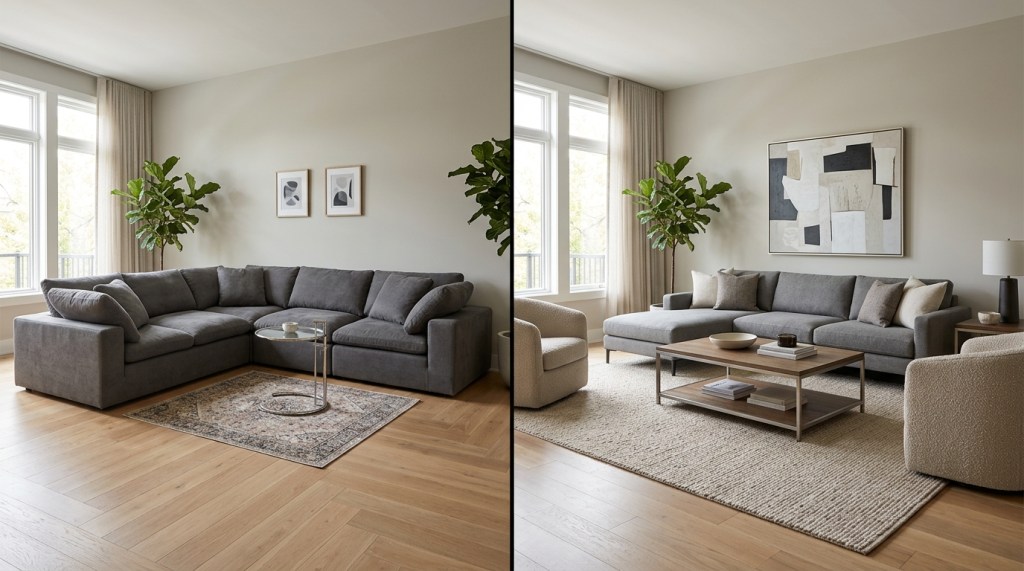
Find Common Design Elements
Furniture styles don’t need to match exactly, but they should share something in common.
Look for similarities such as:
Materials
Examples:
- Wood
- Metal
- Glass
- Leather
Colors
Examples:
- Neutral palette
- Earth tones
- Black accents
Shapes
Examples:
- Curved silhouettes
- Straight lines
- Geometric forms
These shared elements create visual connections.
Balance Old and New Pieces
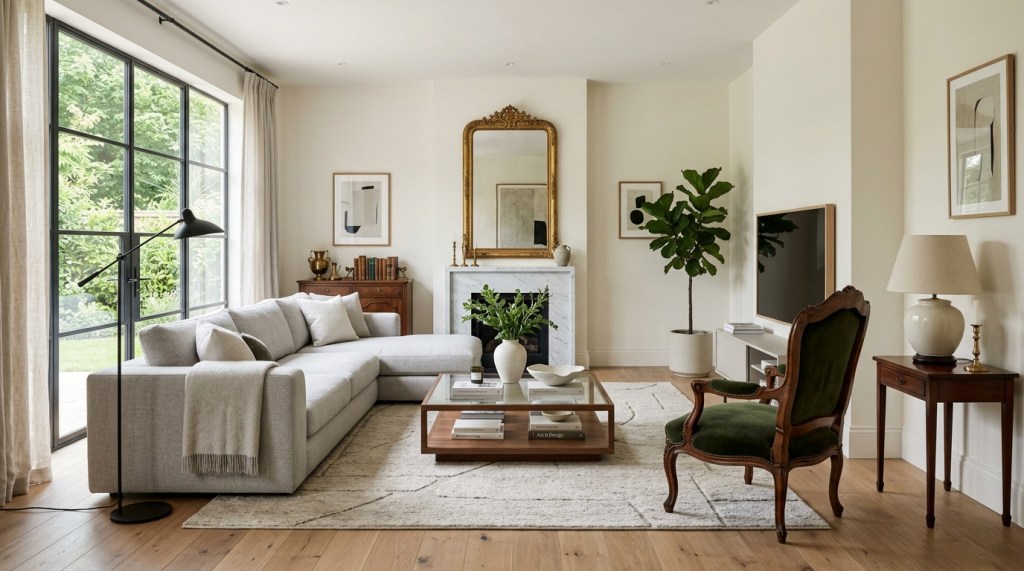
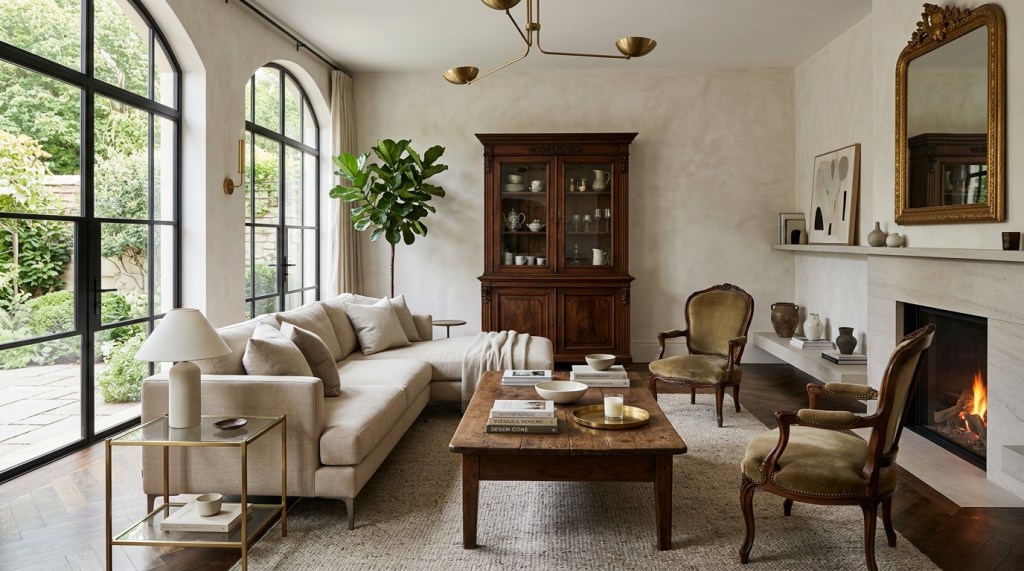
One of the most popular decorating techniques is mixing modern and vintage furniture.
Why It Works
Modern pieces provide simplicity and functionality.
Vintage pieces add:
- Character
- Warmth
- Personality
- History
Example
A room might feature:
- Modern sectional sofa
- Vintage wooden coffee table
- Contemporary floor lamp
The result feels layered and sophisticated.
Create a Focal Point
Every room needs a visual anchor.
Without a focal point, mixed furniture styles can feel scattered.
Common Focal Points
- Large artwork
- Fireplace
- Statement sofa
- TV wall
- Accent wall
The focal point helps organize the room visually.
Once the focal point is established, supporting furniture can follow.
Use Wall Decor to Tie Everything Together
Wall decor can unite different furniture styles.
For example:
A room may contain:
- Modern sofa
- Rustic table
- Vintage chair
Wall art can bridge these styles through:
- Similar colors
- Shared themes
- Coordinated frames
This creates a cohesive appearance.
Effective Wall Decor Options
- Canvas prints
- Framed artwork
- Gallery walls
- Decorative mirrors
Wall decor often acts as the “glue” that connects mixed furniture styles.
Mix Textures, Not Just Styles
Texture adds depth and balance.
Combining textures helps furniture feel intentional.
Examples
- Smooth leather sofa
- Natural wood table
- Woven rug
- Linen cushions
The variety creates visual interest without overwhelming the room.
Avoid Too Many Statement Pieces
A common mistake is allowing every item to demand attention.
Examples:
- Bold sofa
- Ornate cabinet
- Dramatic chandelier
- Colorful artwork
All competing at once.
Instead:
Choose One or Two Stars
Let one furniture piece become the main attraction.
Everything else should support it.
Balance is key.
Common Furniture Mixing Combinations
Modern + Traditional
Creates elegance with contemporary comfort.
Modern + Rustic
Combines clean lines with natural warmth.
Scandinavian + Boho
Creates bright, cozy, and relaxed interiors.
Traditional + Vintage
Adds timeless charm and character.
Modern + Industrial
Creates a sleek, urban feel.
These combinations are popular because they naturally complement one another.
Common Mistakes When Mixing Furniture Styles
1. Mixing Too Many Styles
Stick to two styles initially.
Three or more styles can quickly become overwhelming.
2. Ignoring Color Consistency
Different furniture styles need a common color story.
3. Forgetting Balance
Avoid concentrating one style in a single area.
Distribute styles throughout the room.
4. Buying Without a Plan
Impulse purchases often create visual confusion.
Always consider how a piece fits the overall design.
5. Matching Nothing
Some people misunderstand “mixing styles” and end up with completely unrelated furniture.
There should always be a connecting element.
How Balance Helps Mixed Furniture Styles
Balance ensures that no style dominates the room unfairly.
You can use:
- Symmetrical arrangements
- Visual weight distribution
- Repeated colors
- Consistent materials
If you haven’t already, read:
Balance & Symmetry in Interior Design: Why Some Rooms Feel “Off”
These concepts work hand in hand with furniture mixing.
How This Connects to Your Home Decor Style
Before mixing furniture styles, you should understand your overall design direction.
If you’re still defining your style, read:
How to Choose a Home Decor Style
And if you’re new to decorating entirely, start with:
What Is Home Decor? A Complete Beginner’s Guide
These foundational guides will help you make more confident design decisions.
The Bottom Line
Mixing furniture styles is one of the best ways to create a home that feels personal, stylish, and unique. The key is finding balance between variety and consistency.
Start with a dominant style, maintain a cohesive color palette, pay attention to scale and proportion, and use wall decor to connect different elements together.
Remember, great design isn’t about matching everything perfectly—it’s about creating harmony among different pieces.


Leave a comment