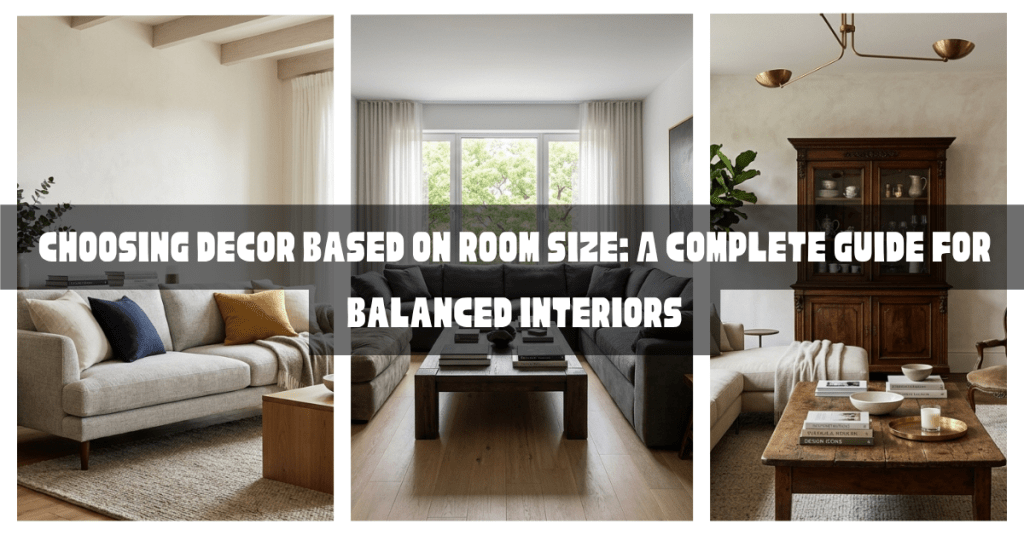
One of the most common home decor mistakes is choosing beautiful furniture and decor items that simply don’t fit the room. A stunning sofa can overwhelm a small living room, while tiny wall art can disappear on a large wall.
The secret to creating a comfortable and visually balanced home isn’t just choosing attractive decor—it’s choosing decor that fits your space.
Understanding how room size affects furniture, wall art, lighting, rugs, and accessories will help you make better decorating decisions and avoid costly mistakes.
In this guide, you’ll learn how to choose decor based on room size so every room feels balanced, functional, and stylish.
Why Room Size Matters in Home Decor
Every room has limitations and opportunities.
When decor is properly sized:
- Rooms feel balanced
- Furniture arrangements work better
- Spaces appear more comfortable
- Movement becomes easier
- The room feels professionally designed
When decor is poorly sized:
- Small rooms feel cramped
- Large rooms feel empty
- Furniture looks awkward
- Visual balance is lost
Room size should always influence your decorating decisions.
Understanding Scale and Room Size
Before selecting decor, it’s important to understand scale.
Scale refers to how large or small an item appears compared to the room itself.
For example:
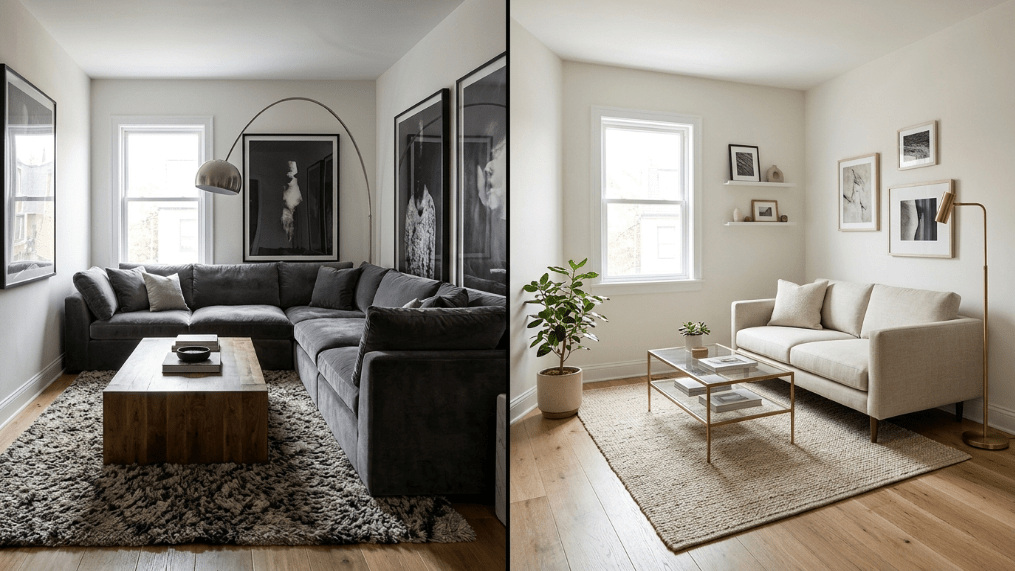
- A large sectional may work beautifully in a spacious living room.
- The same sectional may overwhelm a small apartment.
If you haven’t already, read:
Understanding Scale & Proportion in Interior Design
This concept is the foundation of decorating according to room size.
Step 1: Measure Before You Buy
Many decorating mistakes happen because people buy furniture without measuring.
Before purchasing:
Measure:
- Room length
- Room width
- Ceiling height
- Window placement
- Door clearances
Also measure:
- Existing furniture
- Available wall space
- Walking pathways
Accurate measurements prevent expensive decorating errors.
Decorating Small Rooms
Small rooms require careful planning.
The goal is to maximize functionality while maintaining visual openness.
Choose Furniture With a Smaller Visual Footprint
Look for:
- Slim-profile sofas
- Compact coffee tables
- Open-leg furniture
- Multi-functional pieces
Furniture with visible legs creates a feeling of openness because more floor space remains visible.
Avoid:
- Bulky sectionals
- Oversized recliners
- Heavy furniture sets
Large furniture can make small rooms feel crowded.
Use Fewer Decor Pieces
In small spaces, less is often more.
Instead of filling every surface:
Choose:
- One statement artwork
- One decorative plant
- A few carefully selected accessories
Too many decorative objects create visual clutter.
Select Appropriate Wall Art Sizes
Many homeowners choose artwork that is too small.
For small rooms:
- Use one medium-to-large artwork
- Create a small gallery wall
- Keep spacing consistent
A single larger piece often works better than multiple tiny pieces.
Use Mirrors Strategically
Mirrors help small rooms feel larger by reflecting:
- Natural light
- Views
- Open space
Ideal locations:
- Opposite windows
- Entryways
- Narrow hallways
Mirrors are one of the most effective small-space decorating tools.
Keep Color Palettes Light
Lighter colors create a sense of openness.
Popular choices include:
- White
- Cream
- Light gray
- Soft beige
- Pale green
This doesn’t mean small rooms must be boring. Accent colors can still add personality.
Decorating Medium-Sized Rooms
Medium-sized rooms offer the most flexibility.
You have enough space to layer decor while maintaining balance.
Create Multiple Visual Layers
A medium-sized room can comfortably include:
- Area rugs
- Accent chairs
- Wall art
- Decorative lighting
- Plants
Layering creates depth and visual interest.
Balance Furniture Sizes
Avoid extremes.
Example:
Good:
- Medium sofa
- Medium coffee table
- Balanced wall decor
Poor:
- Oversized sofa with tiny side tables
Consistency creates harmony.
Define Functional Zones
Medium-sized rooms often benefit from designated areas.
Examples:
- Reading corner
- Conversation area
- Workspace
Area rugs and lighting can help define these zones.
Decorating Large Rooms
Large rooms present a different challenge.
The goal is preventing the space from feeling empty or disconnected.
Use Larger Furniture Pieces
Small furniture often gets lost in large spaces.
Choose:
- Large sofas
- Oversized artwork
- Larger coffee tables
- Statement lighting fixtures
Large rooms require visual weight.
Create Conversation Areas
Instead of one furniture arrangement:
Create multiple zones.
Examples:
- Main seating area
- Reading nook
- Entertainment area
This makes large rooms feel more welcoming.
Choose Large-Scale Wall Art
One of the biggest mistakes in large rooms is undersized artwork.
Large walls require:
- Oversized canvas prints
- Large framed artwork
- Gallery walls
- Decorative wall panels
Small art can make large walls feel unfinished.
Use Larger Rugs
A small rug floating in a large room often looks disconnected.
Choose rugs that:
- Anchor furniture groupings
- Define zones
- Provide visual structure
Rugs help large rooms feel cohesive.
Choosing Wall Decor Based on Room Size
Wall decor should always be proportional to the wall itself.
Small Rooms
Best choices:
- One statement artwork
- Small gallery wall
- Mirrors
Avoid:
- Multiple tiny frames scattered randomly
Medium Rooms
Best choices:
- Gallery walls
- Framed art collections
- Decorative shelves
Medium spaces offer flexibility.
Large Rooms
Best choices:
- Oversized canvas art
- Large framed prints
- Wall panel arrangements
Large walls require larger visual elements.
Choosing Lighting Based on Room Size
Lighting significantly affects how spacious a room feels.
Small Rooms
Choose:
- Wall sconces
- Slim floor lamps
- Compact pendant lights
Avoid bulky fixtures.
Medium Rooms
Choose:
- Floor lamps
- Pendant lights
- Table lamps
Layering works well.
Large Rooms
Choose:
- Chandeliers
- Large pendant lighting
- Multiple lighting zones
Large spaces need stronger lighting presence.
Common Decor Mistakes Based on Room Size
1. Oversized Furniture in Small Rooms
Creates visual clutter and restricts movement.
2. Tiny Decor in Large Rooms
Makes rooms feel empty and unfinished.
3. Ignoring Ceiling Height
Tall ceilings require larger vertical elements.
4. Overdecorating Small Spaces
Too many accessories reduce visual breathing room.
5. Underdecorating Large Spaces
Large rooms need enough visual weight to feel complete.
How Room Size Affects Your Home Decor Style
Different decor styles work differently depending on room size.
Small Rooms
Often suit:
- Modern
- Minimalist
- Scandinavian
Large Rooms
Can accommodate:
- Traditional
- Boho
- Layered interiors
If you’re still exploring styles, read:
How to Choose a Home Decor Style
How This Connects to Balance and Scale
Decorating according to room size isn’t just about measurements.
It’s also about:
- Scale
- Proportion
- Balance
- Visual weight
For a deeper understanding, read:
Together, these principles create harmonious interiors.
The Bottom Line
Choosing decor based on room size is one of the simplest ways to improve your home’s appearance. The right furniture, wall art, rugs, and lighting can make a room feel balanced, comfortable, and intentional.
Before buying any decor item, always consider how it relates to the size of the room. A piece doesn’t have to be expensive to look good—it simply needs to fit the space properly.
When scale, proportion, and room size work together, even a modestly decorated room can feel professionally designed.


Leave a comment