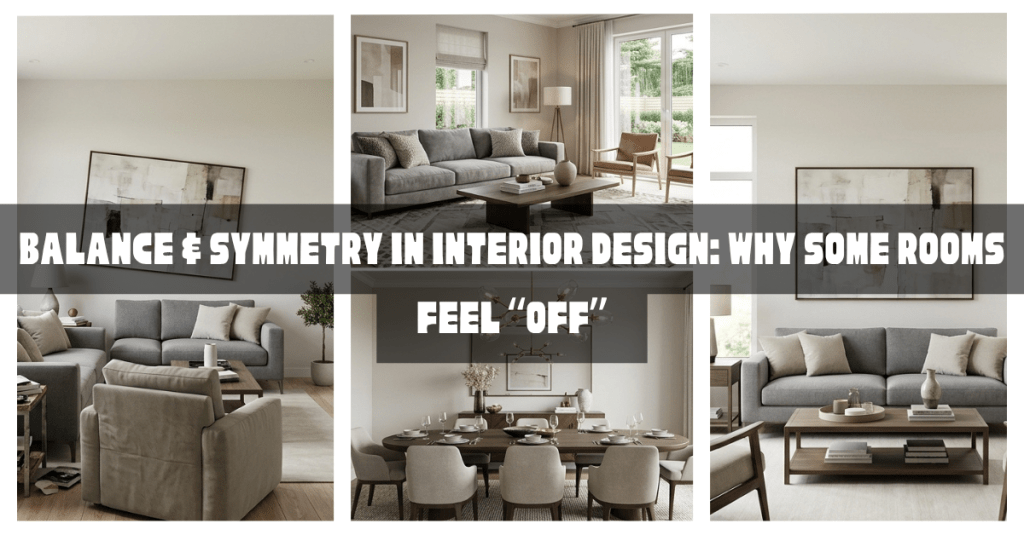
Have you ever walked into a room and felt that something wasn’t quite right, even though you couldn’t identify the problem? The furniture might be beautiful, the colors attractive, and the decor stylish, yet the room still feels uncomfortable or visually awkward.
In many cases, the issue comes down to balance and symmetry.
These two design principles play a major role in how we experience a space. When used correctly, they create harmony, comfort, and visual stability. When ignored, rooms can feel chaotic, unorganized, or incomplete.
In this guide, you’ll learn what balance and symmetry are, why they matter, and how to use them to create a more beautiful and functional home.
Why Balance Matters in Interior Design
Balance is the distribution of visual weight within a room.
Every object in a space carries visual weight. Large furniture, dark colors, bold artwork, and heavy textures naturally attract attention and feel “heavier” than smaller or lighter elements.
A balanced room feels:
- Comfortable
- Stable
- Organized
- Relaxing
- Visually pleasing
An unbalanced room often feels:
- Awkward
- Cluttered
- Uneven
- Stressful
- Incomplete
Balance helps ensure that no single area of a room dominates the entire space.
What Is Symmetry?
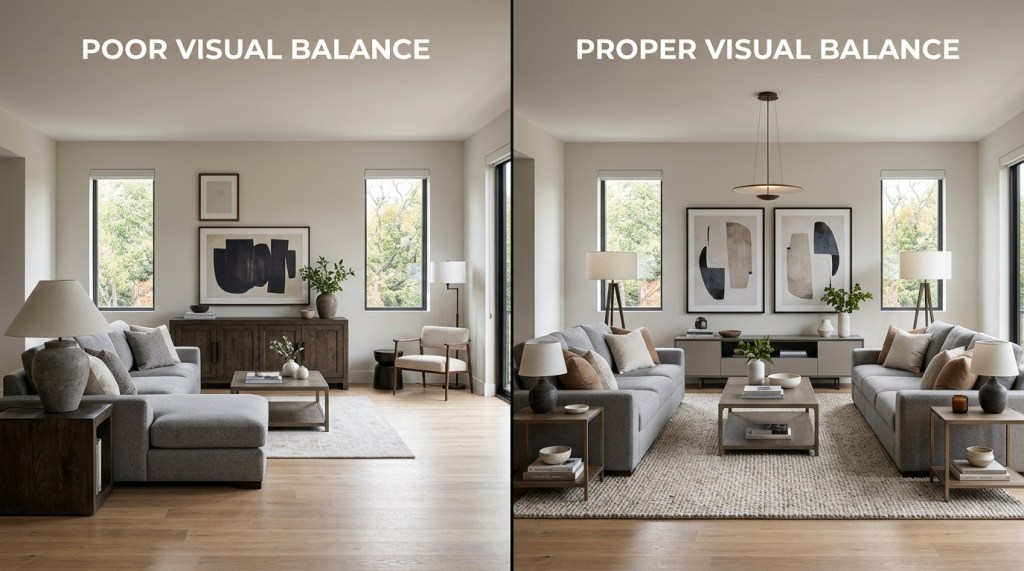
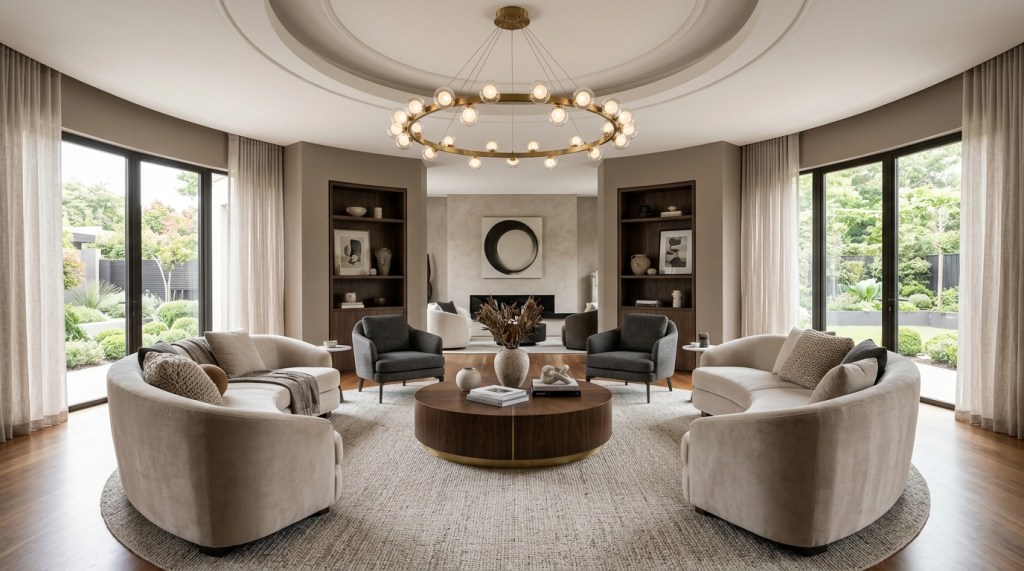
Symmetry occurs when one side of a room mirrors the other.
This is one of the easiest ways to create balance because the visual weight is evenly distributed.
Example of Symmetry
Imagine a sofa placed in the center of a wall with:
- A matching side table on each side
- Identical lamps on both tables
- Similar decorative accessories
The left and right sides visually match.
This arrangement feels orderly and harmonious.
Why Humans Naturally Like Symmetry
Our brains are naturally drawn to symmetry.
We see symmetry in:
- Nature
- Architecture
- Human faces
- Art
Because symmetry feels familiar and predictable, it creates a sense of calm and stability within a room.
This is why many luxury hotels, formal living rooms, and classic interiors rely heavily on symmetrical layouts.
What Is Balance?
Balance is broader than symmetry.
A room can be balanced without being perfectly symmetrical.
The goal is to distribute visual weight evenly throughout the space.
Think of balance as a seesaw:
- If one side is too heavy, the room feels off.
- If both sides feel equal, the room feels comfortable.
The Three Types of Balance in Interior Design
1. Symmetrical Balance
Symmetrical balance is the most formal and traditional type of balance.
It uses matching elements on both sides of a central point.
Examples
- Matching nightstands beside a bed
- Two identical chairs facing a sofa
- Matching wall sconces beside artwork
Benefits
- Easy to create
- Looks elegant
- Creates harmony
- Works well in traditional and classic interiors
Best For
- Living rooms
- Bedrooms
- Dining rooms
- Formal spaces
2. Asymmetrical Balance
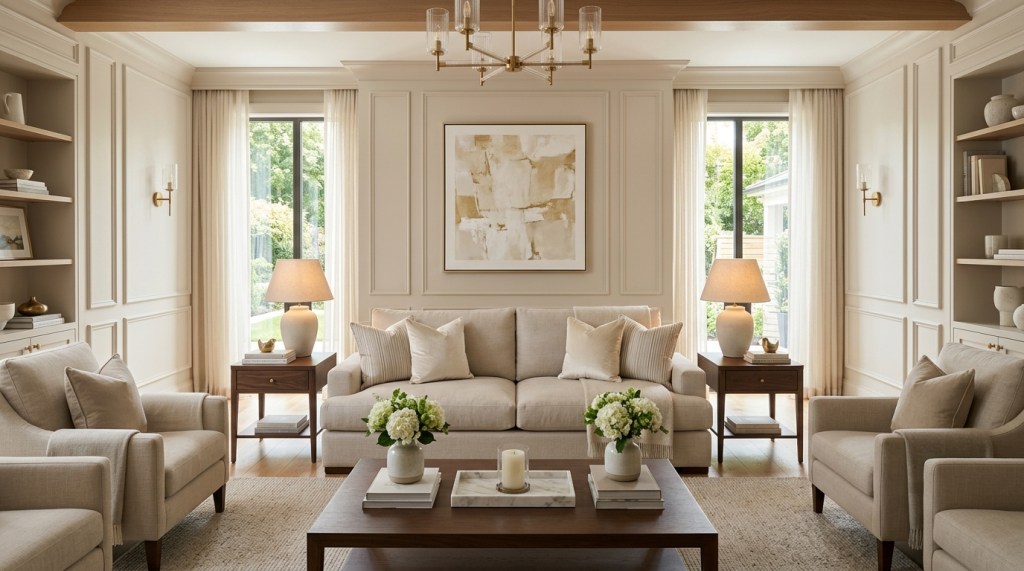
Asymmetrical balance creates visual balance without exact matching.
Objects are different but carry similar visual weight.
Example
One side of a room may contain:
- A large floor lamp
The opposite side may contain:
- A chair
- Small side table
- Decorative plant
Although the objects differ, they balance each other visually.
Benefits
- More relaxed
- Modern appearance
- Flexible and creative
- Adds visual interest
Best For
- Modern homes
- Contemporary interiors
- Small spaces
3. Radial Balance
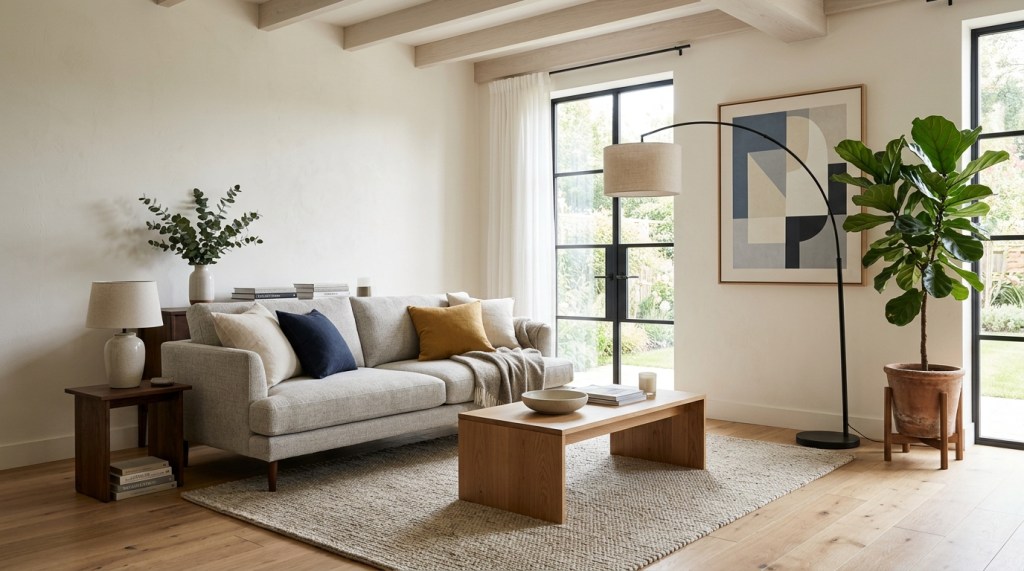
Radial balance occurs when objects are arranged around a central focal point.
Examples
- Dining chairs arranged around a round table
- Seating arranged around a fireplace
- Furniture arranged around a large coffee table
Benefits
- Encourages conversation
- Creates strong focal points
- Makes rooms feel connected
Signs That a Room Feels “Off”
Many homeowners struggle with balance without realizing it.
Here are common warning signs.
1. One Side Feels Heavier
Examples:
- Large furniture concentrated in one corner
- Dark colors only on one side
- Large artwork without visual balance elsewhere
The room naturally feels tilted.
2. Too Many Large Objects Together
When several oversized pieces are grouped together, they create excessive visual weight.
Examples:
- Large sectional sofa
- Oversized coffee table
- Massive entertainment unit
All placed in the same area.
The room feels crowded and overwhelming.
3. Empty Areas Feel Forgotten
A room can feel unbalanced when one area contains all the furniture while another area remains completely empty.
Balance requires attention to the entire space.
4. Poor Furniture Placement
Sometimes the furniture itself is attractive, but the arrangement creates imbalance.
Examples:
- Sofa pushed against one wall
- No visual anchor in the center
- Furniture facing different directions
The room lacks unity.
How to Create Better Balance in Your Home
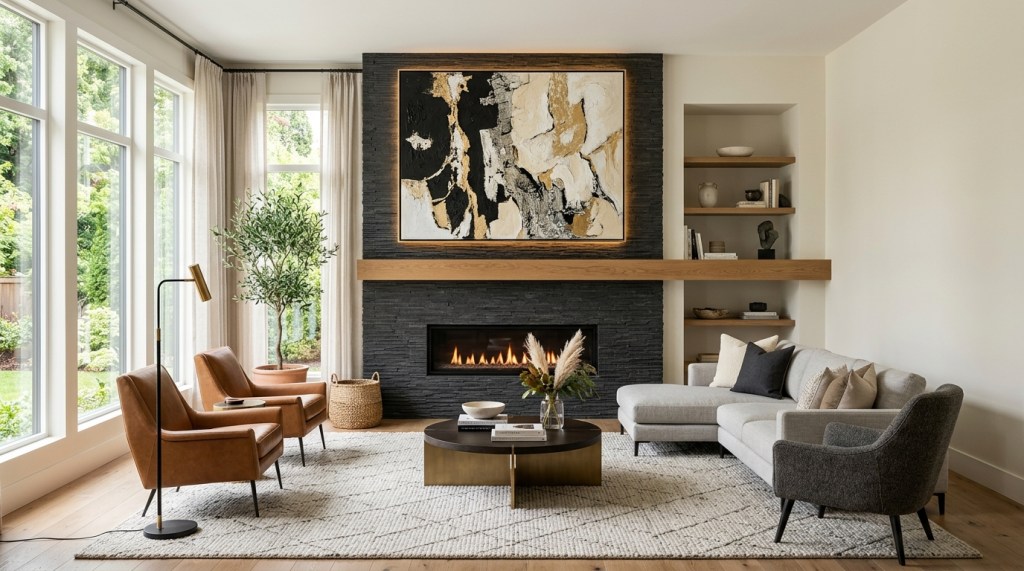
Start With a Focal Point
Every room should have a focal point.
Examples:
- Fireplace
- TV wall
- Large artwork
- Window with a view
Arrange furniture around this feature.
A focal point creates structure and balance.
Distribute Visual Weight
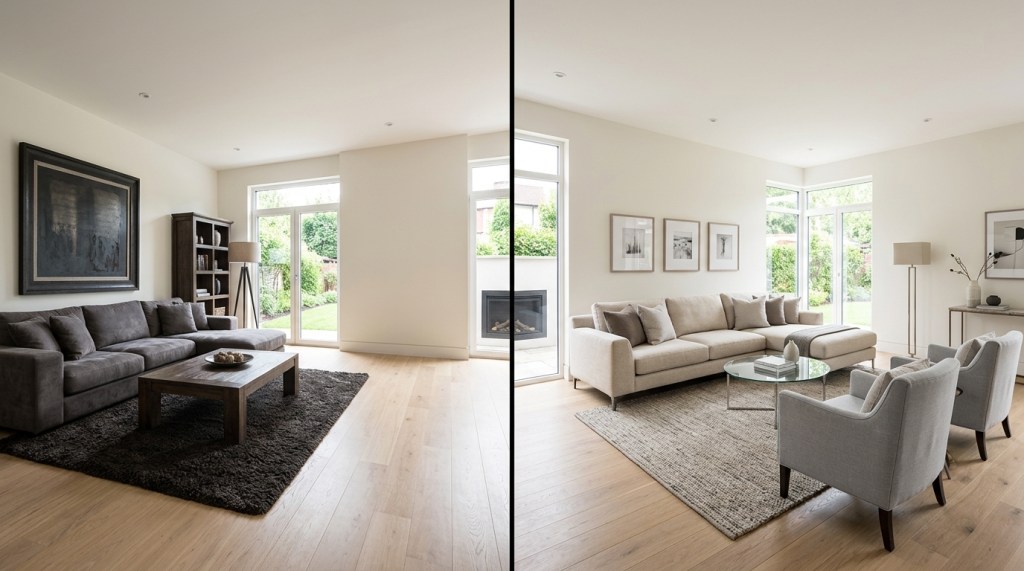
Instead of clustering everything together:
- Spread furniture throughout the room
- Mix large and small items
- Balance dark colors with lighter elements
Visual weight should feel evenly distributed.
Use Pairs Strategically
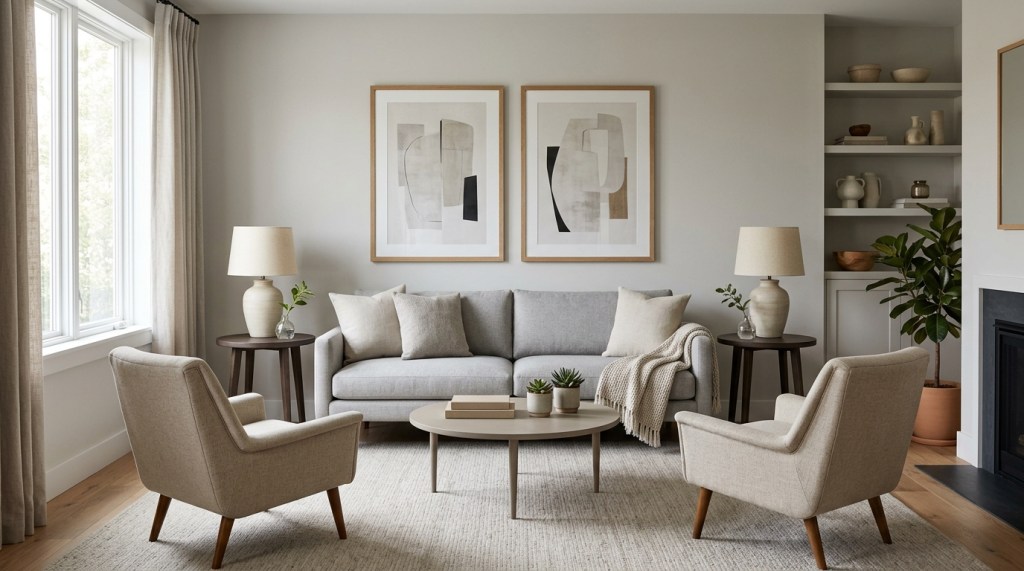
Pairs naturally create symmetry.
Examples:
- Matching lamps
- Matching chairs
- Matching cushions
- Matching bedside tables
You don’t need to use pairs everywhere, but they can instantly improve balance.
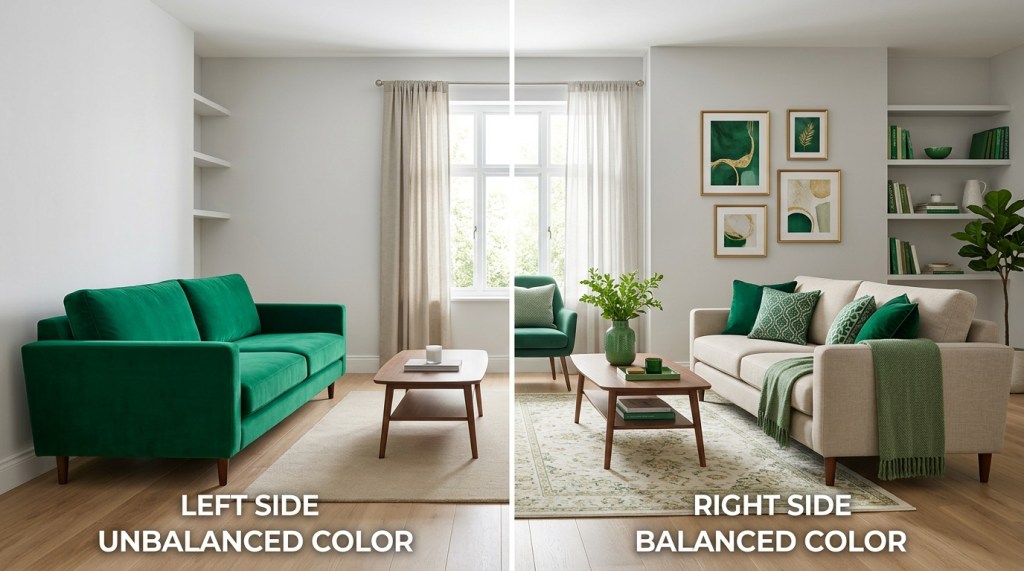
Balance Color Throughout the Room
Color affects visual weight.
Dark colors appear heavier than light colors.
If you use a dark blue sofa on one side of the room, consider adding similar color accents elsewhere.
Examples:
- Cushions
- Artwork
- Throws
- Decorative accessories
This helps create visual harmony.
Balance and Wall Decor
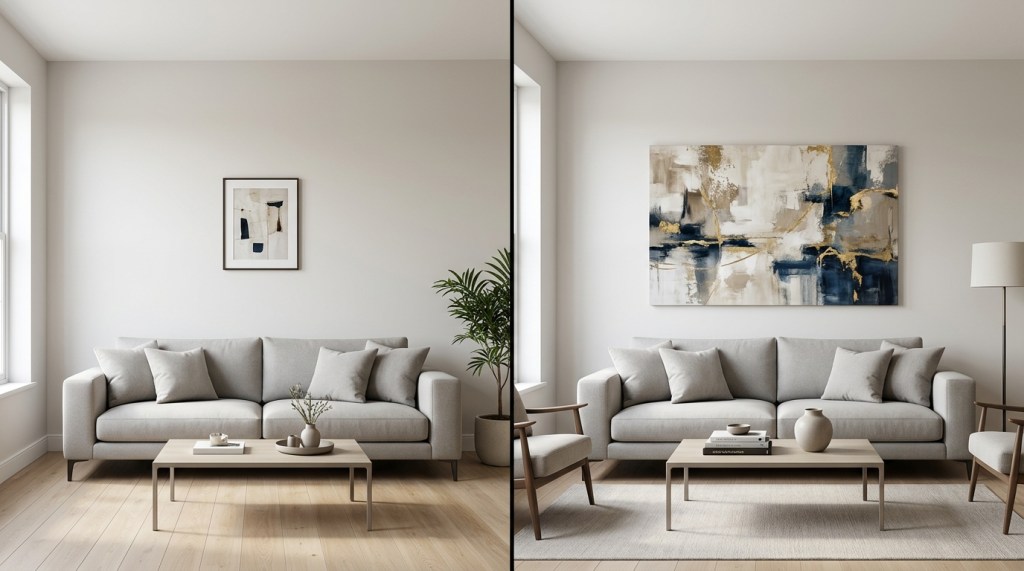
Wall decor plays a significant role in creating balance.
Common Mistake
Hanging artwork on only one wall while leaving the rest of the room visually empty.
Better Approach
Distribute visual interest throughout the room using:
- Framed art
- Mirrors
- Shelves
- Decorative accents
Wall decor should support the room’s overall balance.
Balance and Symmetry in Small Rooms
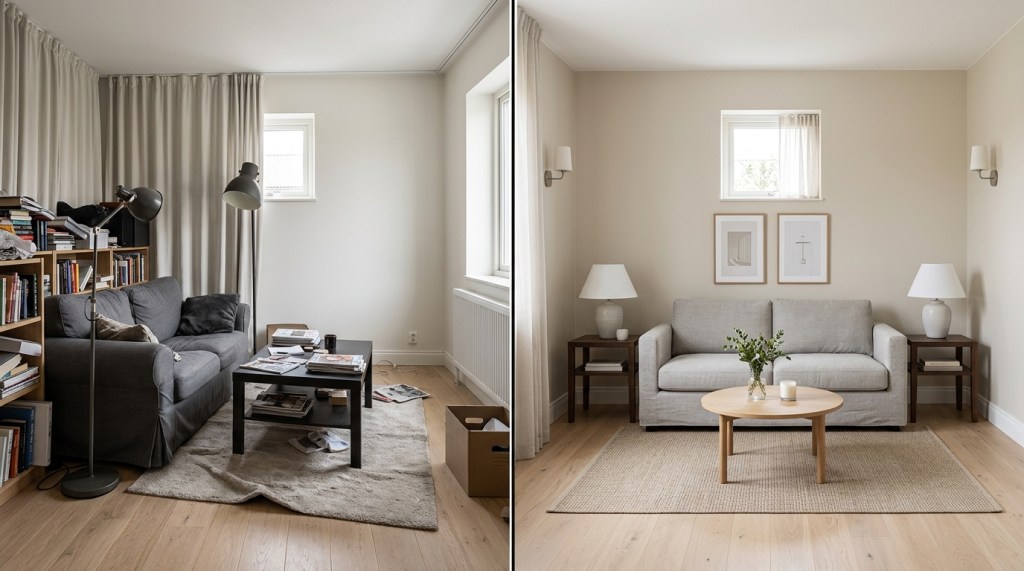
Many people assume small rooms don’t need balance, but balance is even more important in limited spaces.
Tips for Small Rooms
- Avoid oversized furniture
- Keep pathways clear
- Use mirrors to distribute visual weight
- Choose furniture proportional to room size
- Avoid cluttered corners
A balanced small room often feels larger than it actually is.
Common Balance and Symmetry Mistakes
Too Much Symmetry
Perfect symmetry can sometimes feel stiff or boring.
Mix symmetrical layouts with personal touches.
Ignoring Empty Space
Not every corner needs decoration.
Empty space helps create visual balance.
Overdecorating One Area
Avoid placing all decorative objects in one section of the room.
Spread visual interest throughout the space.
Forgetting Scale and Proportion
Balance works best when furniture and decor are properly scaled.
If you haven’t already, read:
Understanding Scale & Proportion in Interior Design
These concepts work together.
How Balance Connects to Your Home Decor Style
Every decorating style uses balance differently.
- Modern interiors often use asymmetrical balance.
- Traditional interiors rely more on symmetry.
- Minimalist spaces use balance through simplicity.
- Boho interiors balance textures and colors rather than matching objects.
Understanding your style helps you apply balance effectively.
For more guidance, read:
How to Choose a Home Decor Style
And if you’re new to decorating:
What Is Home Decor? A Complete Beginner’s Guide
The Bottom Line
Balance and symmetry are essential principles that make rooms feel comfortable, harmonious, and visually appealing. They help organize visual weight, improve furniture arrangements, and create spaces that naturally feel right.
The next time a room feels “off,” look beyond the furniture itself. Examine how visual weight is distributed, whether symmetry is needed, and whether certain areas feel too heavy or too empty.
Small adjustments can completely transform the atmosphere of a room.
This post is part of our Home Decor Guidance Series. In the next guide, we’ll explore How to Mix Furniture Styles Without Clashing, helping you combine different furniture pieces while maintaining a cohesive and stylish home.


Leave a comment