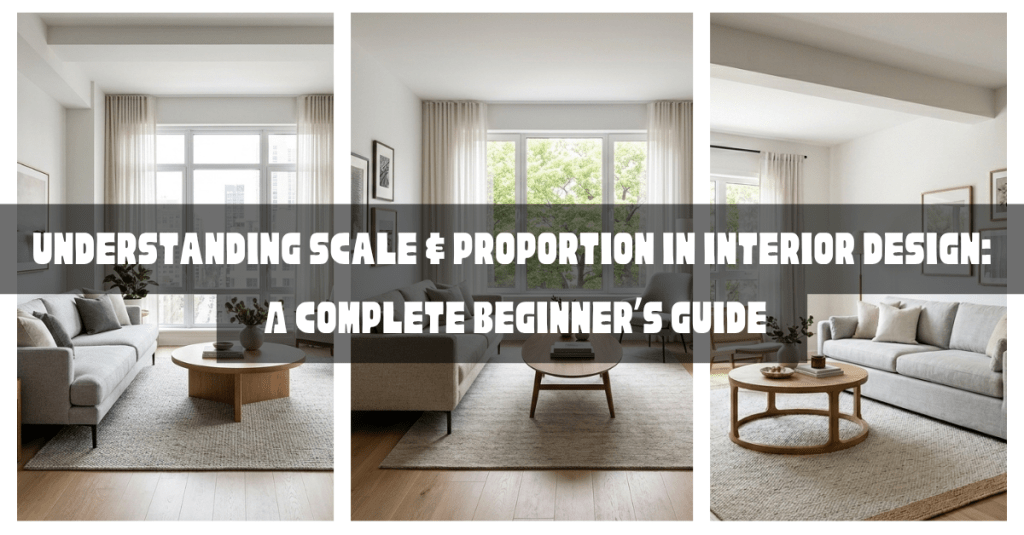
One of the biggest reasons a room feels awkward, cramped, or visually unbalanced is poor use of scale and proportion. Even beautiful furniture, expensive decor, and perfect color schemes can look wrong if the sizes of objects do not work together.
The good news is that understanding scale and proportion is easier than most people think. Once you learn these principles, you’ll be able to create rooms that feel balanced, comfortable, and professionally designed.
In this guide, we’ll break down scale and proportion in simple terms and show you exactly how to use them in your home.
Why Scale and Proportion Matter
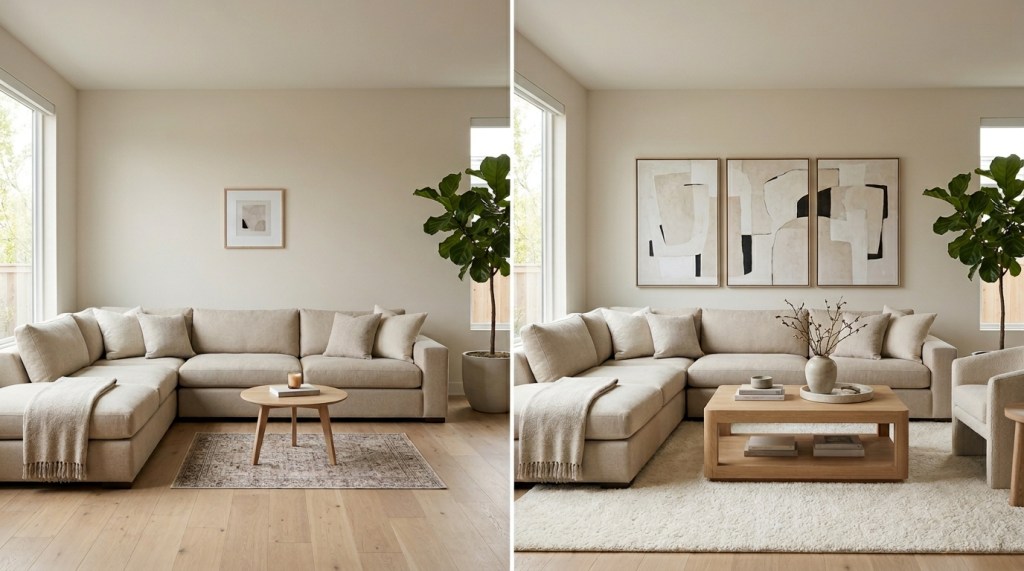
Imagine placing a tiny rug in a large living room or hanging a small picture on a huge empty wall. Even if the items are attractive, the room feels incomplete.
Scale and proportion help create:
- Visual balance
- Better furniture arrangements
- Comfortable movement through the room
- A more professional and cohesive appearance
- Better use of available space
Understanding these concepts helps prevent costly decorating mistakes.
What Is Scale in Interior Design?
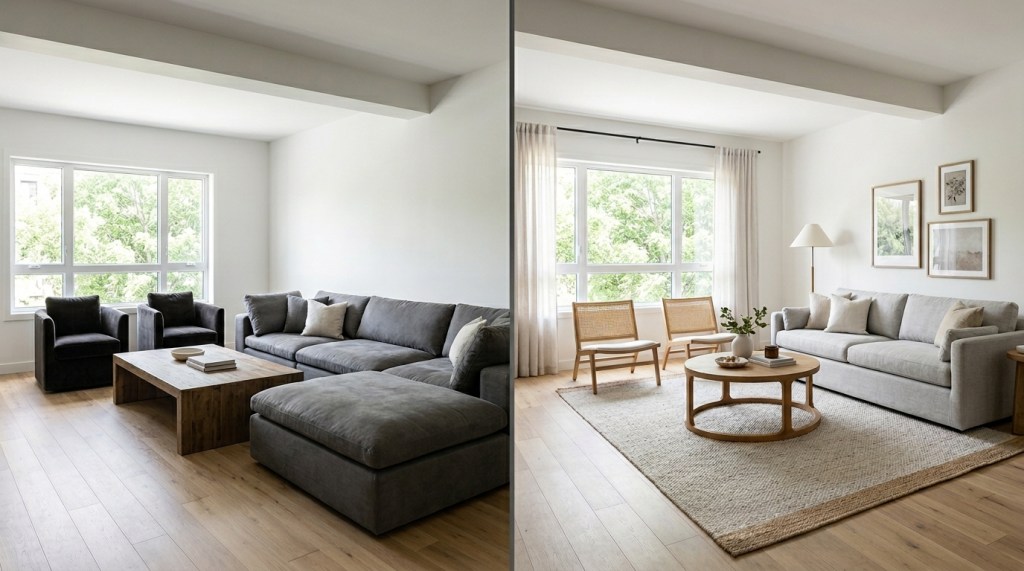
Scale refers to the size of an object in relation to the room it occupies.
In simple terms:
- Large room = larger furniture and decor
- Small room = smaller furniture and decor
Scale helps determine whether an item feels too big, too small, or just right for a space.
Examples of Good Scale
- A large sectional sofa in a spacious living room
- A small side table beside a reading chair
- Large wall art above a king-size bed
Examples of Poor Scale
- A huge sofa in a tiny apartment
- Tiny artwork on a large wall
- An oversized coffee table blocking movement
When scale is correct, the room feels natural and comfortable.
What Is Proportion in Interior Design?
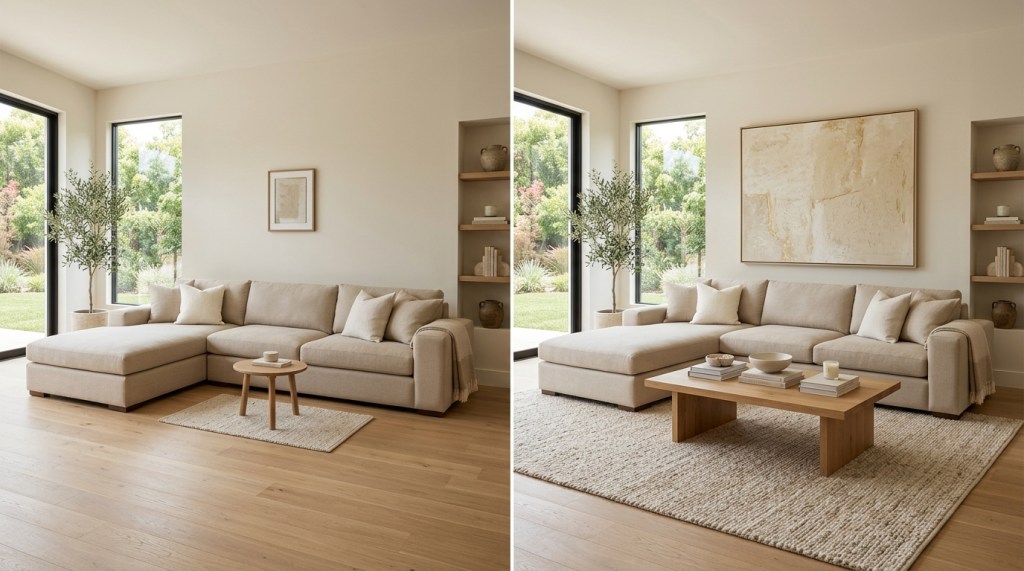
Proportion refers to the relationship between objects within the same space.
While scale focuses on the room itself, proportion focuses on how items relate to each other.
For example:
- Coffee table compared to sofa
- Lamp compared to side table
- Artwork compared to wall size
Good proportion creates harmony.
Poor proportion creates visual tension and imbalance.
Scale vs. Proportion: What’s the Difference?
Many beginners confuse these terms.
Scale
Measures an item’s size compared to the room.
Example:
A large sofa in a small room may be out of scale.
Proportion
Measures an item’s size compared to other objects nearby.
Example:
A tiny coffee table paired with a large sectional sofa may be out of proportion.
Think of it this way:
- Scale = object vs. room
- Proportion = object vs. object
Both must work together.
The Golden Rule of Visual Balance
Interior designers often use a simple principle:
Avoid Extremes
Rooms feel best when there is a mix of:
- Large elements
- Medium elements
- Small elements
For example:
Living Room
- Large sofa
- Medium coffee table
- Small decorative accessories
This creates visual rhythm and balance.
How Scale Affects Furniture Selection
Furniture is usually the largest element in a room, making scale especially important.
For Small Rooms
Choose:
- Slim-profile furniture
- Furniture with exposed legs
- Multi-functional pieces
- Compact coffee tables
Avoid:
- Bulky sectionals
- Oversized recliners
- Heavy furniture clusters
For Large Rooms
Choose:
- Larger sofas
- Bigger rugs
- Statement lighting
- Larger wall art
Avoid:
- Tiny furniture scattered around
- Small rugs floating in the middle of the room
Large rooms need visual weight.
Choosing the Right Rug Size
Rugs are one of the most common scale mistakes.
Living Room Rule
At least the front legs of major furniture pieces should sit on the rug.
Common Mistake
Using a rug that is too small.
A tiny rug makes the entire room look disconnected.
A properly sized rug anchors the space and improves proportion.
How to Choose the Right Wall Art Size
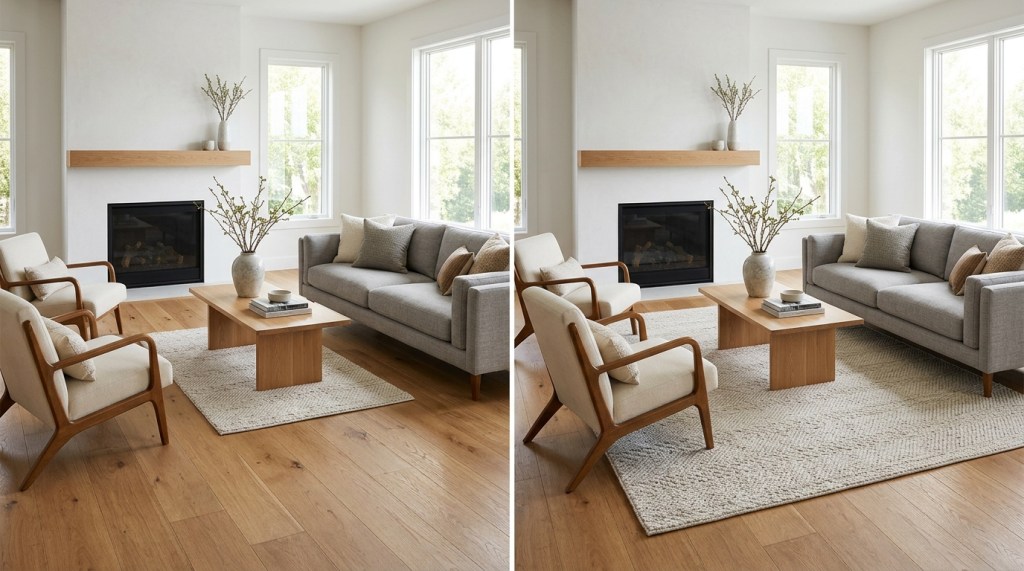
Wall decor plays a major role in scale and proportion.
General Guideline
Artwork should occupy approximately 60% to 75% of the available wall space.
Example
If a sofa is 84 inches wide:
- Artwork above it should be about 50–63 inches wide.
This creates balance without overwhelming the wall.
Scale and Proportion for Gallery Walls
Gallery walls are excellent examples of proportion in action.
To create a balanced gallery wall:
- Use similar spacing between frames
- Mix frame sizes thoughtfully
- Treat the arrangement as one large visual unit
- Keep the center of the display at eye level
Random placement often feels chaotic.
Understanding Ceiling Height and Vertical Scale
Ceiling height affects how large decor elements should be.
High Ceilings
Work well with:
- Tall bookcases
- Large artwork
- Statement chandeliers
- Vertical wall decor
Standard Ceilings
Work best with:
- Medium-sized artwork
- Balanced furniture heights
- Simpler lighting fixtures
Decor should complement the room’s vertical space.
Common Scale and Proportion Mistakes
1. Tiny Rugs
Makes rooms feel disconnected.
2. Oversized Furniture
Reduces usable space and creates visual heaviness.
3. Small Wall Art
Leaves walls looking unfinished.
4. Furniture Pushed Against Walls
Can make rooms feel awkward rather than larger.
5. Ignoring Room Dimensions
Buying furniture without measuring often leads to scale problems.
Quick Room-by-Room Examples
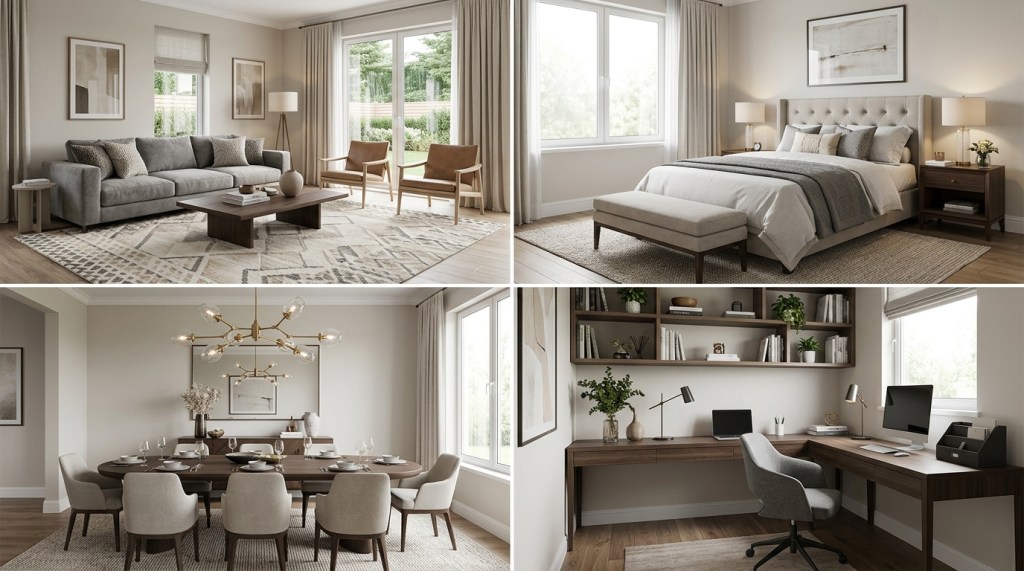
Living Room
- Large sofa
- Medium coffee table
- Properly sized rug
- Large wall art
Bedroom
- Artwork proportional to bed size
- Balanced nightstands
- Lamps scaled to bedside tables
Dining Room
- Dining table centered under lighting
- Chandelier proportional to table size
- Adequate space around chairs
How Scale and Proportion Improve Home Decor
When these principles are applied correctly:
- Rooms feel larger
- Furniture arrangements look intentional
- Wall decor feels balanced
- Spaces become more inviting
- Home decor appears more professional
Many people think great interiors require expensive furniture. In reality, proper scale and proportion often matter more than price.
How This Connects to Your Home Decor Style
Before selecting furniture or wall decor, it’s important to choose a style that fits your personality and space.
If you haven’t yet, read:
How to Choose a Home Decor Style
And if you’re completely new to decorating, start with:
What Is Home Decor? A Complete Beginner’s Guide
These guides provide the foundation needed to apply scale and proportion successfully.
The Bottom Line
Scale and proportion are two of the most important principles in interior design. They determine whether a room feels balanced, comfortable, and visually appealing.
Before buying furniture, rugs, lighting, or wall art, always consider how each item relates to both the room and the surrounding pieces. Small adjustments in size and placement can dramatically improve the overall look of your home.
This post is part of our Home Decor Guidance Series. In the next guide, we’ll explore Balance & Symmetry: Why Some Rooms Feel Instantly Harmonious, and how designers use these principles to create beautiful spaces.


Leave a comment