
Introduction
Choosing a rug can seem simple until you actually have to decide what size to buy.
A rug can look perfect online but feel completely wrong once it arrives. It might be too small to connect your furniture, too large for the room, or positioned in a way that makes the entire space feel unbalanced.
That’s why knowing how to choose rug size is just as important as choosing the right color or pattern.
The right rug should work with the size of your room, the furniture arrangement, and the way you use the space. A living room rug follows different rules from a bedroom rug, while a dining room rug needs enough extra space for chairs to remain on the rug when they’re pulled away from the table.
The good news is that you don’t need to memorize complicated interior-design rules.
With a measuring tape, a basic understanding of your furniture layout, and a few simple guidelines, you can choose a rug that fits your room much more confidently.
In this guide, we’ll explain how to choose the right rug size for every major room in your home, where furniture should sit, how much floor should remain visible, and the common mistakes you should avoid before buying.
1. Measure Your Room Before Choosing a Rug
Before looking at rug colors, patterns, or materials, start with the most important step: measure the space.
A rug should fit the room and furniture arrangement—not the other way around.
Measure:
- The total length of the room
- The total width of the room
- The furniture area you want the rug to cover
- Doorways and walking paths
- Any unusual corners or architectural features
Then mark the approximate rug dimensions on the floor using painter’s tape.
This simple trick can make it much easier to visualize whether a rug will actually work.
Don’t Measure Only the Empty Floor
The available floor area isn’t the only consideration.
For example, a living room might technically have enough space for a large 9×12-foot rug, but if the furniture arrangement is compact, that rug could dominate the room.
Likewise, a smaller rug may technically fit but fail to connect the seating area visually.
Think about the furniture zone you’re trying to define.
A Simple Rule
Before buying, ask:
What furniture do I want this rug to connect?
If the answer is “the sofa, chairs, and coffee table,” measure that entire arrangement rather than simply measuring the empty floor.
2. How to Choose the Right Rug Size for a Living Room
The living room is one of the most common places where people struggle with rug sizing.
The most important thing is to make sure the rug visually connects the seating area.
A rug that is too small can make furniture appear disconnected, while an appropriately sized rug can make the entire arrangement feel more intentional.
Common Living Room Rug Sizes
| Rug Size | Typical Use |
|---|---|
| 5×7 ft | Small seating areas |
| 6×9 ft | Compact to medium living rooms |
| 8×10 ft | Many standard seating arrangements |
| 9×12 ft | Larger living rooms |
| 10×14 ft+ | Large/open spaces |
These are starting points rather than strict rules. Your furniture arrangement and room dimensions should determine the final choice.
The 8×10 Rug
An 8×10 rug is a popular middle-ground option because it can work with many standard living-room layouts.
It can often accommodate:
- Sofa
- Coffee table
- Front legs of chairs
- Additional seating
But don’t automatically choose 8×10 simply because it’s common.
Measure first.
The Most Important Question
Ask yourself:
Will the rug visually connect my seating furniture?
If the answer is no, the rug may be too small.
3. Should the Sofa Be Completely on the Rug?
Not necessarily.
There are several ways to position a sofa and rug, and the best option depends on your room size.
Option 1: All Furniture on the Rug
This creates a large, unified seating zone.
It’s particularly useful in:
- Large living rooms
- Open-plan spaces
- Large sectional arrangements
The rug needs to be large enough to accommodate the major furniture pieces without looking cramped.
Option 2: Front Legs on the Rug
This is one of the most practical arrangements for medium-sized rooms. how to choose rug size
Place the rug underneath the front legs of:
- Sofa
- Accent chairs
- Other primary seating
The coffee table should generally sit completely on the rug.
This arrangement visually connects the furniture without requiring an enormous rug.
Option 3: Coffee Table Only
A smaller rug can sit underneath the coffee table while the seating remains completely outside it.
This can work in particularly small spaces, but it can also make the seating area feel less connected.
If you’re using this approach, pay close attention to proportions.
💡 Before You Buy
Use painter’s tape to mark the proposed rug dimensions on your floor.
Then place your furniture normally.
Walk around the room and see whether the taped area connects the seating arrangement naturally.
This costs almost nothing and can prevent an expensive sizing mistake.
4. How to Choose a Rug Size for a Bedroom
Bedroom rugs have slightly different requirements.
Instead of defining a seating arrangement, the rug usually works with the bed and bedside furniture.
For larger bedrooms, a rug can extend underneath most of the bed and nightstands.
For smaller bedrooms, you can use a rug that begins below the lower portion of the bed.
Common Bedroom Options
King bed:
An 8×10 or 9×12 rug can work well depending on room size and furniture placement.
Queen bed:
A 6×9 or 8×10 rug may work depending on the available space.
Full or twin bed:
Smaller rugs or runners can be appropriate.
Again, these aren’t universal rules.
The room dimensions matter just as much as the bed size.
What Should the Rug Cover?
Ideally, you want enough rug extending around the bed to create a comfortable visual and physical border.
If you only have a tiny strip of rug visible at the foot of the bed, it may look undersized.
A rug should feel intentional rather than like something that barely fits underneath the furniture.
🛏️ A Simple Bedroom Trick
If a large rug isn’t practical for your budget or room size, consider two runners on either side of the bed.
This can provide softness where you actually need it while using less rug material.
It can be especially useful in:
- Small bedrooms
- Guest rooms
- Narrow bedrooms
- Apartments
👉 Check the Latest Price on Amazon
5. How to Choose the Right Dining Room Rug Size
Dining rooms have one very important rug-sizing requirement:
The chairs need enough room to remain on the rug when they’re pulled away from the table.
If the rug ends immediately behind the chair legs, the chairs can catch on the edge every time someone sits down.
That’s uncomfortable and can also make the rug move around.
A Practical Guideline
Your rug should extend beyond the dining table enough to accommodate the chairs when they’re pulled out.
For many dining arrangements, allowing approximately 24 inches or more around the table provides useful clearance.
But measure your actual table and chairs because chair dimensions vary.
Example
If your dining table is approximately:
60 inches long × 36 inches wide
you could start by considering a rug around:
108 inches × 84 inches
That’s roughly a 9×7-foot area, meaning a standard 8×10 rug may be a practical choice depending on the orientation and available room.
The exact size should always be checked against your room.
Don’t Forget the Table Shape
Round tables can work beautifully with:
- Round rugs
- Square rugs
- Large rectangular rugs
A round rug underneath a round table can reinforce the shape and create a cohesive look.
6. How to Choose a Rug for a Small Living Room
Small rooms don’t necessarily need tiny rugs.
In fact, choosing a rug that’s too small can sometimes make a small living room feel even more fragmented.
Instead of automatically buying the smallest rug that fits, think about how the rug can visually connect the main furniture.
For a small living room, consider:
- 5×7 for compact arrangements
- 6×9 for larger seating zones
- A rug positioned under the front legs of seating
- Low-profile furniture around the rug
- A simple pattern that doesn’t overwhelm the room
The goal is to create a clearly defined seating zone without covering every inch of floor.
One Important Mistake
Don’t choose a rug based solely on the fact that it fits underneath the coffee table.
A rug can technically fit the table and still be too small for the overall seating arrangement.
Think furniture grouping first, rug second.
7. Choosing a Rug Size for an Open-Plan Living Space
Open-plan homes can make rug sizing more complicated because one large area may serve several purposes.
You might have:
- A living room
- Dining area
- Kitchen
- Entryway
all sharing one continuous floor.
Instead of trying to cover the entire open space with one enormous rug, use rugs to define individual zones.
For example, a living-room rug can visually separate the seating area from the dining area.
Keep the Zones Connected
The rugs don’t necessarily need to match exactly, but they should work together.
You can coordinate them through:
- Similar colors
- Complementary patterns
- Related textures
- Similar visual weight
Avoid using completely unrelated rugs in adjacent areas because they can make the open space feel visually fragmented.
💡 A Useful Tip
Before buying a large rug for an open-plan room, use painter’s tape to mark the proposed dimensions.
Stand back and look at the entire space.
You’ll quickly see whether the rug defines the area nicely or overwhelms the room.
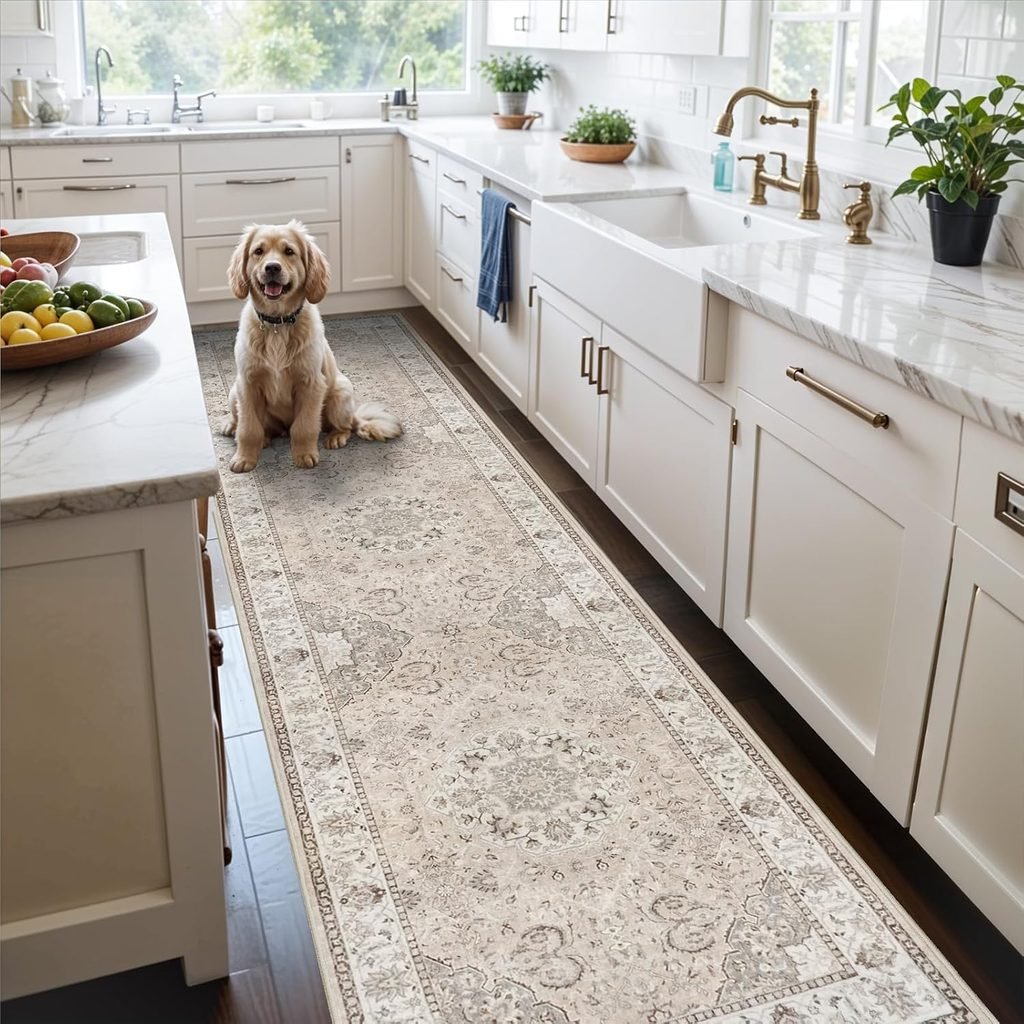
8. Choosing a Runner Rug for Hallways and Entryways
Hallways usually require a different approach from living rooms and bedrooms.
Instead of trying to cover the entire floor, a runner rug can add warmth, texture, and visual direction while leaving some floor visible around the edges.
Measure Before Buying
Measure:
- The hallway’s total length
- Its width
- Door openings
- Areas where doors swing open
You don’t want the rug interfering with doors or creating a tripping hazard.
Leave Some Floor Around the Edges
A runner generally shouldn’t be exactly the same width as the hallway.
Leaving visible flooring along the sides creates a deliberate border and prevents the rug from looking crammed into the space.
For Entryways
Entryway rugs should also allow enough clearance for doors.
A small rectangular rug or runner can work well depending on the shape of the entrance.
For high-traffic areas, prioritize:
- Easy cleaning
- Durable construction
- Low profile
- Non-slip backing or rug pad
🏠 A Practical Choice
A washable runner rug can be especially useful in an entryway because this is one of the areas most likely to collect dirt and everyday debris.
👉 Check the Latest Price on Amazon
9. Round vs. Rectangular Rugs: Which Should You Choose?
Rug shape can change how a room feels.
Rectangular rugs are the most versatile option and work with many traditional furniture layouts.
Round rugs, however, can be useful when you want to soften a room dominated by straight lines.
Choose a Rectangular Rug When:
- Your sofa arrangement is rectangular
- You have a long dining table
- You’re defining a large seating area
- Your room has a conventional layout
Consider a Round Rug When:
- You have a round dining table
- You want to highlight a small seating area
- Your furniture arrangement is curved
- You want to soften a room with many straight lines
Don’t Match Shapes Automatically
A round table doesn’t have to sit on a round rug.
A rectangular rug can work underneath a round table if the proportions and room layout make sense.
The most important factor is whether the rug comfortably accommodates the furniture. how to choose rug size
10. How Much Floor Should Show Around a Rug?
There’s no single measurement that works for every room.
The amount of visible flooring depends on:
- Room size
- Furniture arrangement
- Rug size
- Architectural features
- Personal preference
However, you generally want the exposed floor around the rug to look intentional.
If only a tiny strip of flooring is visible around the edges, the rug may look oversized.
If there is a huge amount of empty flooring between the rug and furniture, the rug may feel disconnected from the space.
Think About Visual Borders
Imagine the rug creating a frame around your furniture.
You want enough visible flooring to distinguish the rug from the walls while still allowing it to anchor the furniture arrangement.
For many rooms, a consistent border of visible flooring can create a balanced appearance. how to choose rug size
11. Common Rug-Sizing Mistakes to Avoid
Even if you’ve measured your room, a few common mistakes can still lead to a rug that doesn’t work.
Mistake 1: Buying the Smallest Rug That Fits
A rug shouldn’t simply fit underneath one piece of furniture.
It should work with the entire furniture arrangement.
Mistake 2: Ignoring the Chair Clearance
This is especially important in dining rooms.
If dining chairs constantly catch on the rug edge, the rug isn’t large enough for the setup.
Mistake 3: Forgetting Door Clearance
Check whether doors can open freely over the rug.
This is particularly important for:
- Bedrooms
- Bathrooms
- Entryways
- Hallways
Mistake 4: Choosing Based Only on Appearance
A rug may look beautiful in a product photo but be completely wrong for your room.
Always consider dimensions before color or pattern.
Mistake 5: Skipping the Rug Pad
A rug pad can help improve stability and comfort while also helping the rug maintain its position.
Mistake 6: Ignoring Furniture Scale
Large furniture generally needs a rug that can visually support it.
Putting a tiny rug underneath a large sectional can make the furniture arrangement feel disproportionate.
12. Rug Size Cheat Sheet
Here’s a quick reference you can save before shopping.
| Room / Area | Common Rug Sizes to Consider |
|---|---|
| Small living room | 5×7 or 6×9 ft |
| Medium living room | 8×10 ft |
| Large living room | 9×12 ft or larger |
| Queen bedroom | 6×9 or 8×10 ft |
| King bedroom | 8×10 or 9×12 ft |
| Dining room | 8×10 or larger, depending on table |
| Small entryway | 2×3 or 3×5 ft |
| Hallway | 2×6, 2×8, or 2×10 ft runner |
| Small seating corner | 4×6 or 5×7 ft |
| Large open-plan zone | 8×10, 9×12, or larger |
Important: These are general starting points, not universal rules. Always measure your room, furniture, and available floor space before purchasing. how to choose rug size
13. How to Choose the Right Rug Size on a Budget
You don’t always need the biggest or most expensive rug to create a well-designed room.
The key is to spend your budget where the rug will have the greatest visual and practical impact.
If Your Budget Is Limited:
Prioritize the main room first.
For example, if you’re decorating your living room and bedroom at the same time, you might invest in a properly sized living-room rug first rather than buying several undersized rugs.
Consider These Options:
- Washable rugs
- Flatweave rugs
- Machine-made rugs
- Neutral designs that work with multiple decor styles
- Rugs that can transition between rooms
A versatile rug can also be useful if you expect to rearrange your furniture later.
Don’t Sacrifice Size Just for Pattern
If you’re deciding between a beautifully patterned small rug and a simpler rug that properly anchors your furniture, consider the function of the rug first.
A simple, appropriately sized rug can often look more intentional than an attractive rug that’s too small. how to choose rug size
14. Use a Rug Pad to Improve the Setup how to choose rug size
Once you’ve selected the right size, don’t forget what’s underneath it.
A rug pad can help:
- Reduce slipping
- Add cushioning
- Keep the rug flatter
- Protect flooring
- Improve comfort
- Reduce movement
Choose a rug pad that is appropriate for your flooring type and compatible with the rug.
It should generally be slightly smaller than the rug so that it isn’t visible around the edges.
💡 One More Measurement
When planning your rug, remember to account for the combined height of the rug and pad.
This is particularly important near doors.
A rug that technically fits the floor may still prevent a door from opening properly if the total thickness is too high. how to choose rug size
15. The 5-Minute Rug Buying Checklist
Before clicking Buy, run through this checklist.
Measure
☐ Room length
☐ Room width
☐ Furniture arrangement
☐ Door clearance
☐ Walking paths
Check the Rug
☐ Is the rug large enough for the furniture?
☐ Will it define the intended area?
☐ Will dining chairs remain on it when pulled out?
☐ Is there enough visible flooring around it?
☐ Does the shape work with the furniture?
Check the Practical Details
☐ Is it suitable for the room’s traffic level?
☐ Is it easy to clean?
☐ Do you need a rug pad?
☐ Will doors open properly?
☐ Does the material suit your lifestyle?
Taking five minutes to check these things can save you from ordering the wrong size and dealing with a return later. how to choose rug size how to choose rug size
Bonus: How to Visualize Your Rug Before Buying
Still unsure about the size? Don’t guess—create a quick mock-up before ordering.
Use painter’s tape to outline the exact dimensions of the rug directly on your floor. For example, if you’re considering an 8×10-foot rug, measure and mark an 8×10-foot rectangle.
Then place your furniture around the taped area exactly as you normally use it.
Pay attention to three things:
- Furniture connection: Does the rug visually connect the sofa, chairs, and table?
- Walking space: Can you move around the room comfortably?
- Floor balance: Is there enough visible flooring around the rug?
You can also use a bedsheet or inexpensive blanket to roughly cover the area. It won’t look exactly like the finished rug, but it gives you a much better sense of the proportions.
This small planning step is especially helpful when buying a larger rug because returning an incorrectly sized rug can be inconvenient and expensive.
Remember: Measure twice, buy once. A few minutes of planning can make the difference between a rug that merely fits and one that makes the entire room feel properly finished.
Final Thoughts
Learning how to choose rug size doesn’t have to be complicated.
The biggest mistake is treating the rug as an isolated decoration. Instead, think of it as part of the entire furniture arrangement.
Start by measuring your room. Then consider the furniture you want the rug to connect, how much floor you want visible, and how people will move through the space.
For living rooms, focus on connecting the seating area. For bedrooms, think about the relationship between the rug and bed. For dining rooms, make sure chairs have enough room to move. For hallways and entryways, pay attention to width, door clearance, and durability.
And before buying, use painter’s tape to mark the rug dimensions on your floor. how to choose rug size
Related Post:
15 Home Styling Tricks That Make Any Room Look More Put Together