
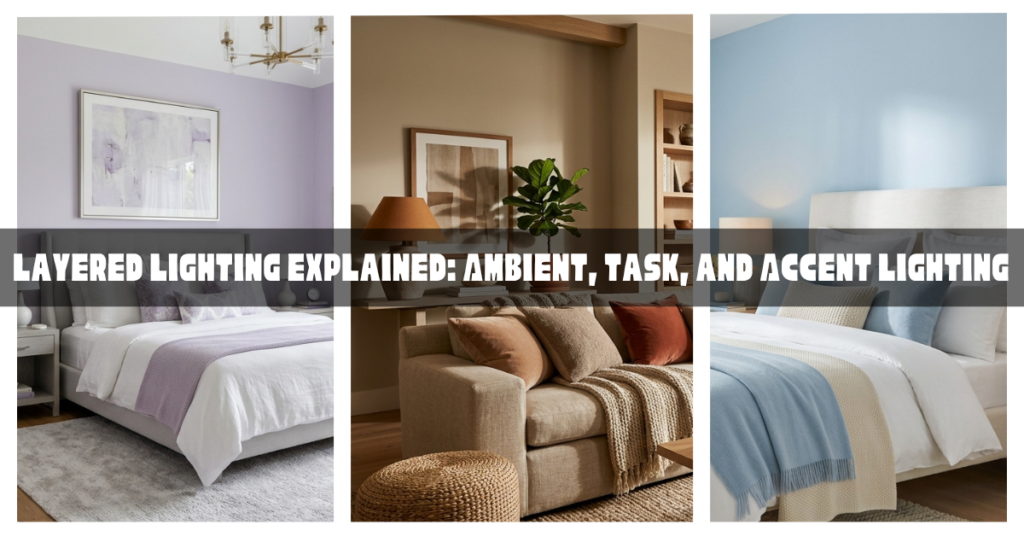
Layered lighting creates a balanced combination of ambient, task, and accent lighting for every room.Lighting is one of the most powerful yet often overlooked elements of home decor. Even the most beautifully decorated room can feel dull, uncomfortable, or incomplete if the lighting isn’t planned properly.
Many homeowners rely on a single ceiling light to illuminate an entire room. While this provides basic visibility, it rarely creates a warm, functional, or visually appealing space.
Professional interior designers use a technique called layered lighting. Instead of depending on one light source, they combine different types of lighting to improve both the function and atmosphere of a room.
In this guide, you’ll learn what layered lighting is, understand the three main types of lighting—ambient, task, and accent lighting—and discover how to use them together to create a home that feels comfortable, stylish, and inviting.
What Is Layered Lighting?
Layered lighting is the practice of combining multiple light sources to meet different needs within a room.
Rather than relying on one bright overhead fixture, layered lighting creates depth by using different types of illumination for different purposes.
A well-lit room usually includes:
- Ambient lighting
- Task lighting
- Accent lighting
Together, these layers make a space feel brighter, more balanced, and more comfortable.
Why Layered Lighting Matters
Good lighting affects much more than visibility.
It can:
- Improve comfort
- Highlight architectural features
- Make rooms appear larger
- Enhance colors and textures
- Create different moods
- Increase functionality
Lighting is often called the “fourth dimension” of interior design because it changes how every other design element is perceived.
The Three Layers of Lighting
Professional lighting design is built around three essential layers.
Let’s explore each one.
1. Ambient Lighting
Ambient lighting is the main source of illumination in a room.
It provides general lighting that allows people to move around safely and comfortably.
Think of ambient lighting as the foundation of your lighting plan.
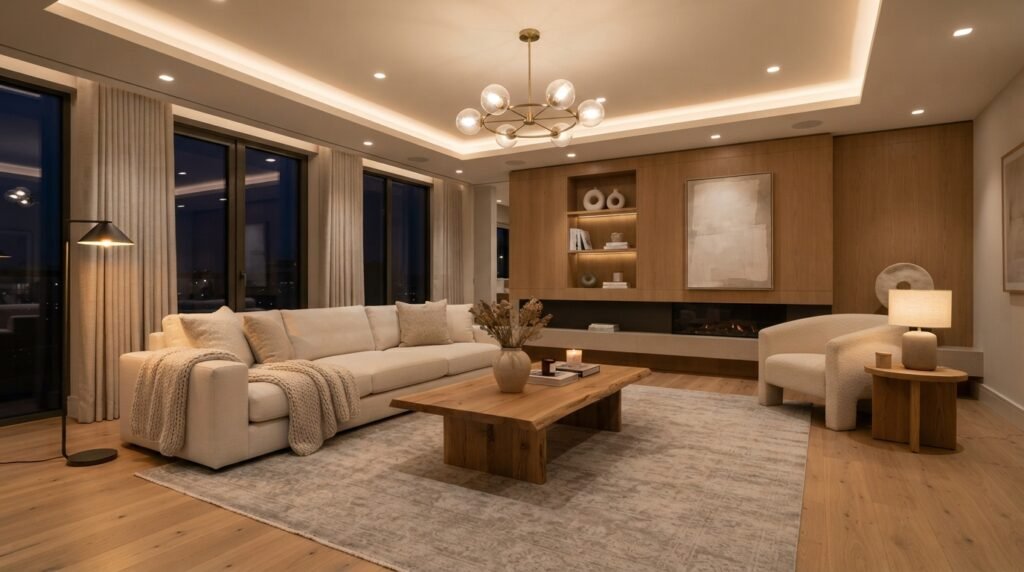
Common Sources of Ambient Lighting
Examples include:
- Ceiling-mounted fixtures
- Chandeliers
- Recessed lighting
- Flush mount lights
- Semi-flush mount lights
- Natural daylight
These fixtures provide overall illumination for the entire room.
Best Rooms for Ambient Lighting
Ambient lighting is essential in every room, including:
- Living rooms
- Bedrooms
- Kitchens
- Bathrooms
- Hallways
- Dining rooms
No room should rely solely on task or accent lighting.
Decorating Tip
Whenever possible, install dimmer switches.
Dimmers allow you to adjust brightness depending on the time of day and the activity taking place.
2. Task Lighting
Task lighting provides focused illumination for specific activities.
Unlike ambient lighting, it is designed to improve visibility while performing tasks.
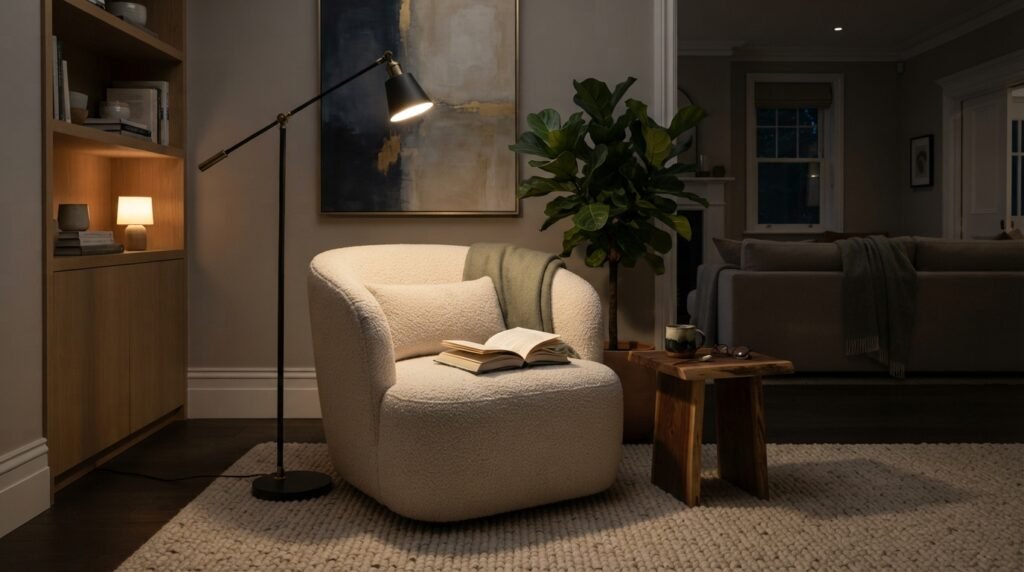
Common Uses for Task Lighting
Task lighting is useful for:
- Reading
- Cooking
- Studying
- Writing
- Applying makeup
- Sewing
- Working on a computer
Common Task Lighting Fixtures
Examples include:
- Table lamps
- Desk lamps
- Floor lamps beside chairs
- Under-cabinet kitchen lighting
- Vanity lights
- Adjustable wall lamps
These fixtures direct light exactly where it’s needed.
Why Task Lighting Matters
Without proper task lighting, people often experience:
- Eye strain
- Shadows
- Reduced productivity
Adding focused lighting makes everyday activities easier and more comfortable.
3. Accent Lighting
Accent lighting is decorative lighting used to highlight specific features within a room.
Its primary purpose is creating visual interest rather than providing general illumination.
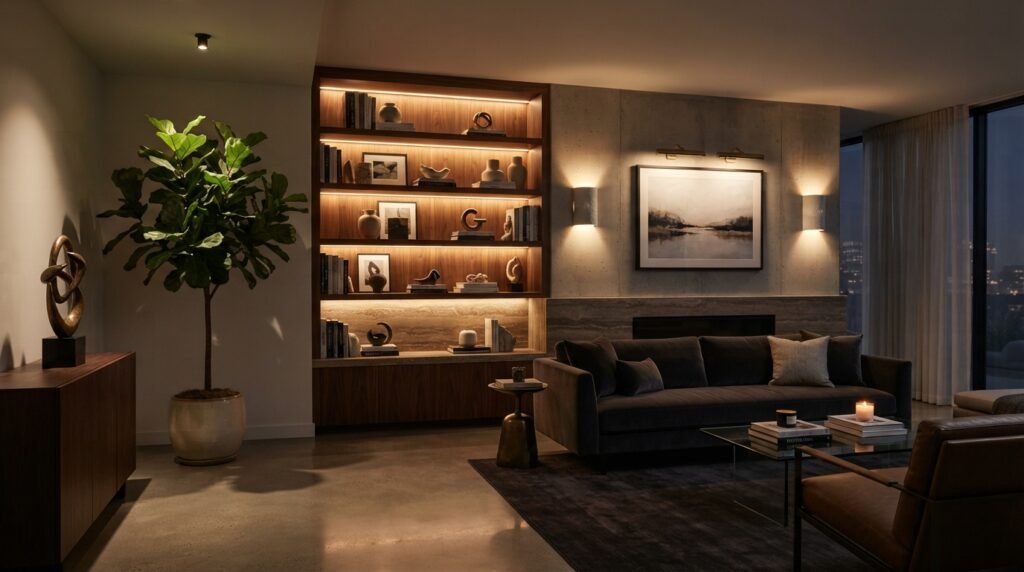
Accent Lighting Can Highlight
- Artwork
- Wall decor
- Shelving
- Plants
- Fireplaces
- Architectural details
- Textured walls
Accent lighting adds depth and creates a more luxurious appearance.
Common Accent Lighting Fixtures
Examples include:
- Wall sconces
- Picture lights
- LED strip lighting
- Cabinet lighting
- Spotlights
- Uplights
These fixtures draw attention to decorative elements.
Why Accent Lighting Matters
Accent lighting creates:
- Drama
- Warmth
- Depth
- Visual balance
Without it, rooms can appear flat and one-dimensional.
How the Three Lighting Layers Work Together
Imagine a living room.
Ambient Lighting
A ceiling light provides overall brightness.
Task Lighting
A floor lamp beside the sofa makes reading comfortable.
Accent Lighting
Wall sconces illuminate artwork while LED shelving lights showcase decorative objects.
Each layer has a different purpose, but together they create a balanced and inviting environment.
Layered Lighting for Every Room
Living Room
A living room serves many purposes, including relaxing, entertaining, and reading.
Ambient Lighting
- Chandelier
- Recessed ceiling lights
Task Lighting
- Floor lamp beside the sofa
- Table lamps on side tables
Accent Lighting
- Wall sconces
- Picture lights
- LED shelves
This combination creates a flexible and comfortable living space.
Bedroom
Bedrooms require soft, relaxing lighting.
Ambient Lighting
- Ceiling fixture
- Flush mount light
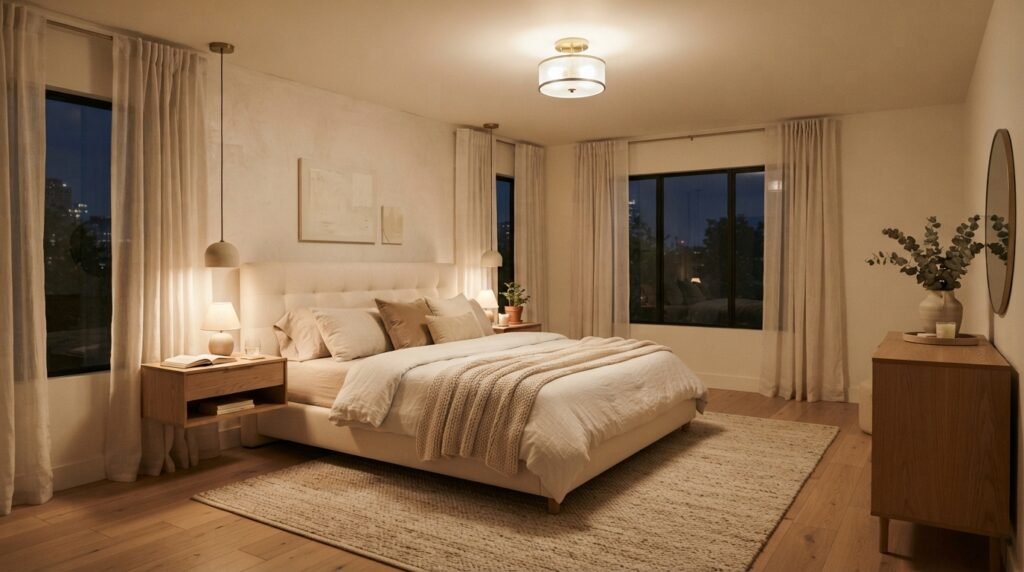
Task Lighting
- Bedside table lamps
- Adjustable reading lights
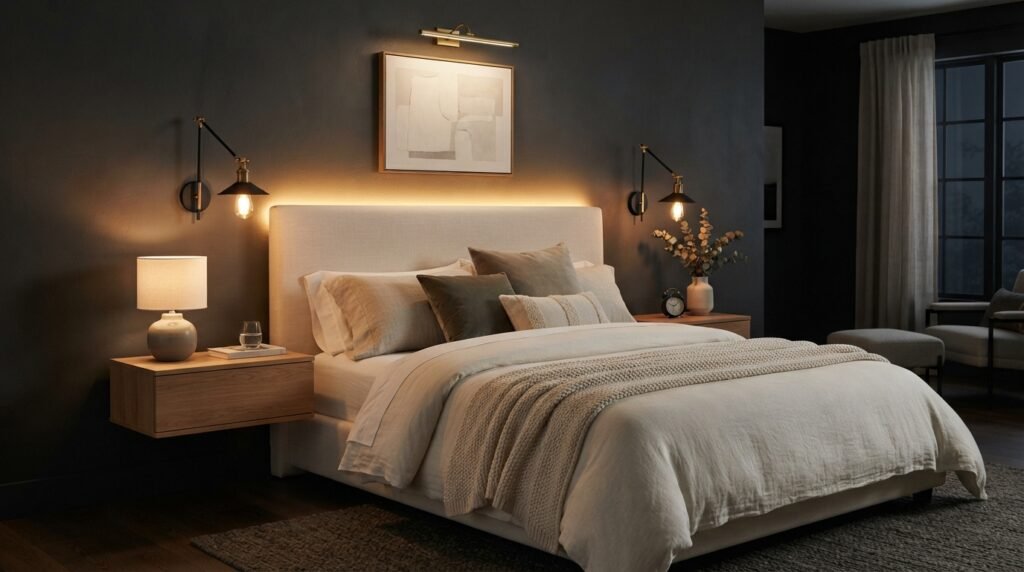
Accent Lighting
- LED headboard lighting
- Decorative wall sconces
Layering light creates a calming atmosphere for better sleep.
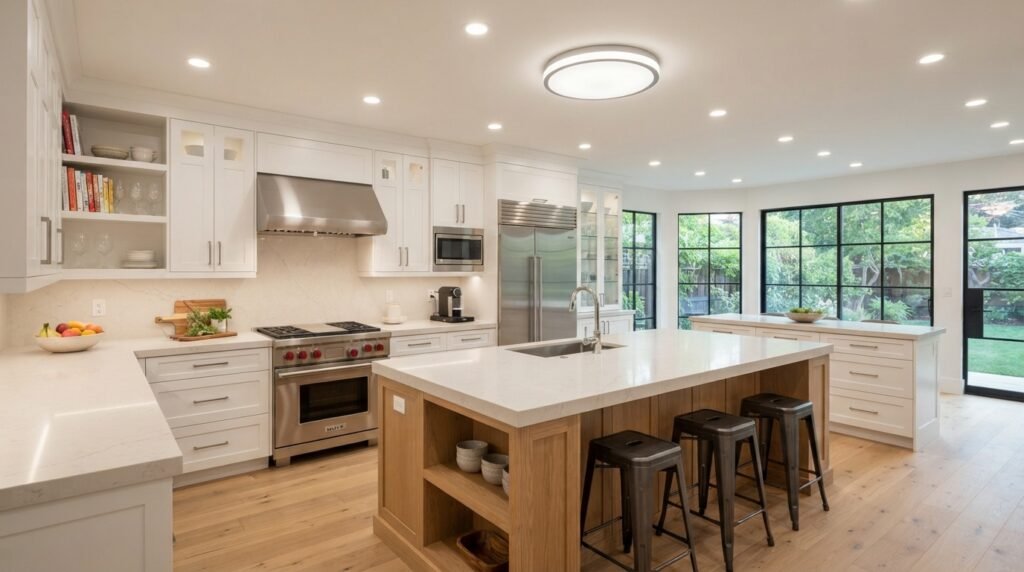
Kitchen
Kitchens need bright functional lighting.
Ambient Lighting
- Recessed ceiling lights
- Flush-mounted fixtures
Task Lighting
- Under-cabinet lighting
- Pendant lights over islands
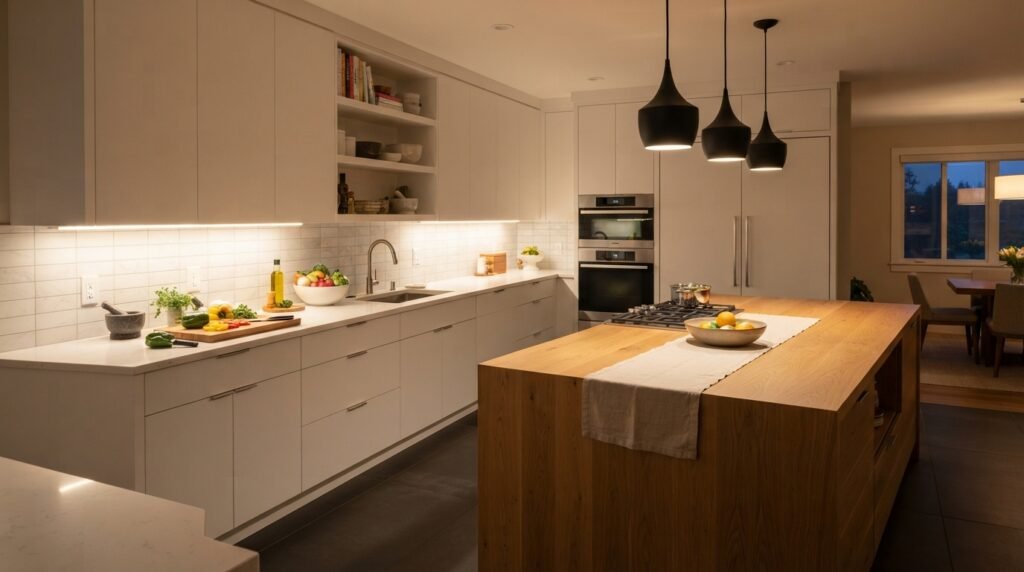
Accent Lighting
- Glass cabinet lighting
- Toe-kick LED lighting
Good lighting improves both safety and appearance.
Bathroom
Bathrooms require even, shadow-free lighting.
Ambient Lighting
- Ceiling fixture
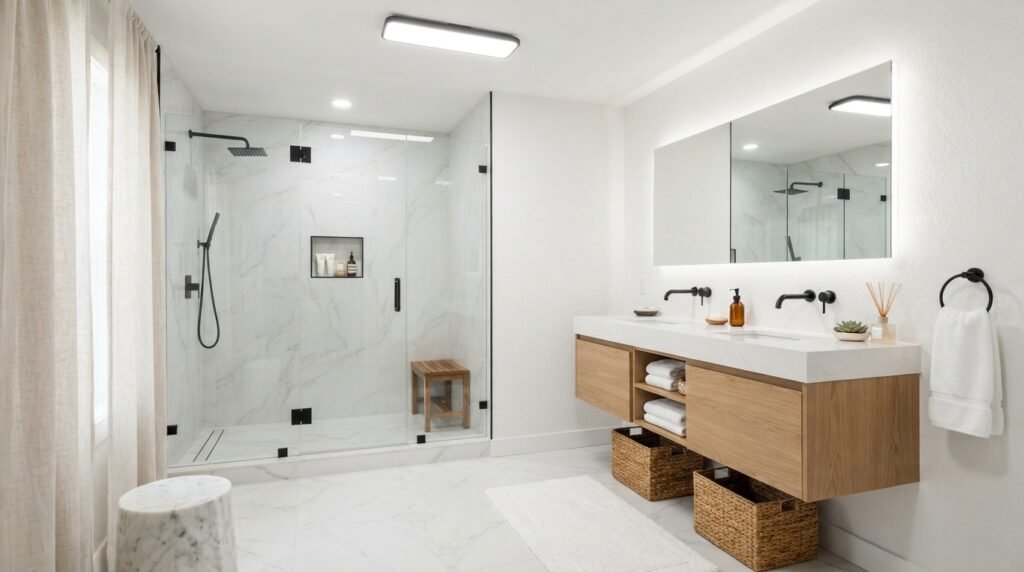
Task Lighting
- Vanity lights around the mirror
Accent Lighting
- Decorative sconces
- LED niche lighting
This combination creates both function and luxury.
Dining Room
Dining rooms benefit from warm, inviting lighting.
Ambient Lighting
- Chandelier above the table
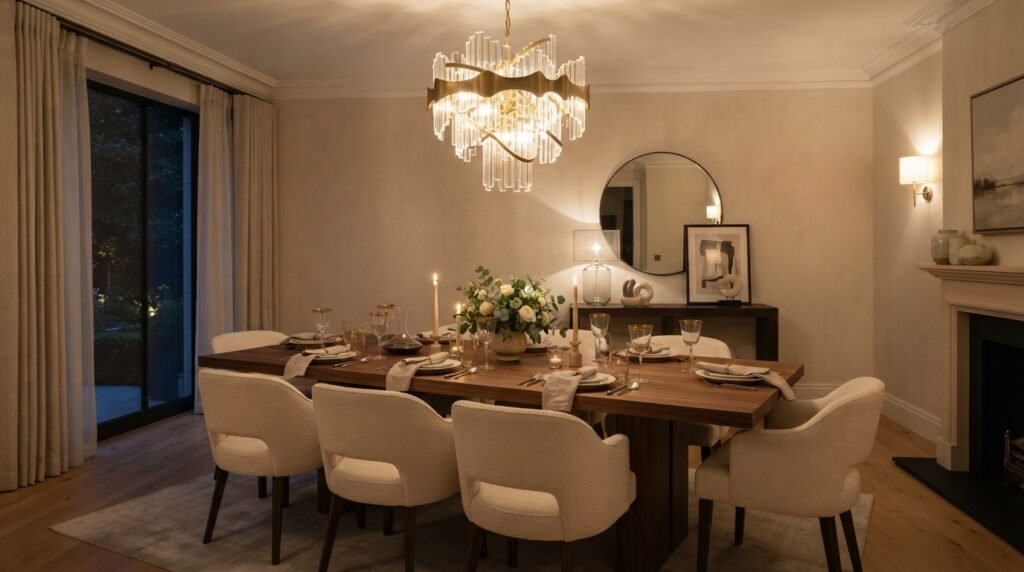
Task Lighting
Usually minimal unless the room doubles as a workspace.
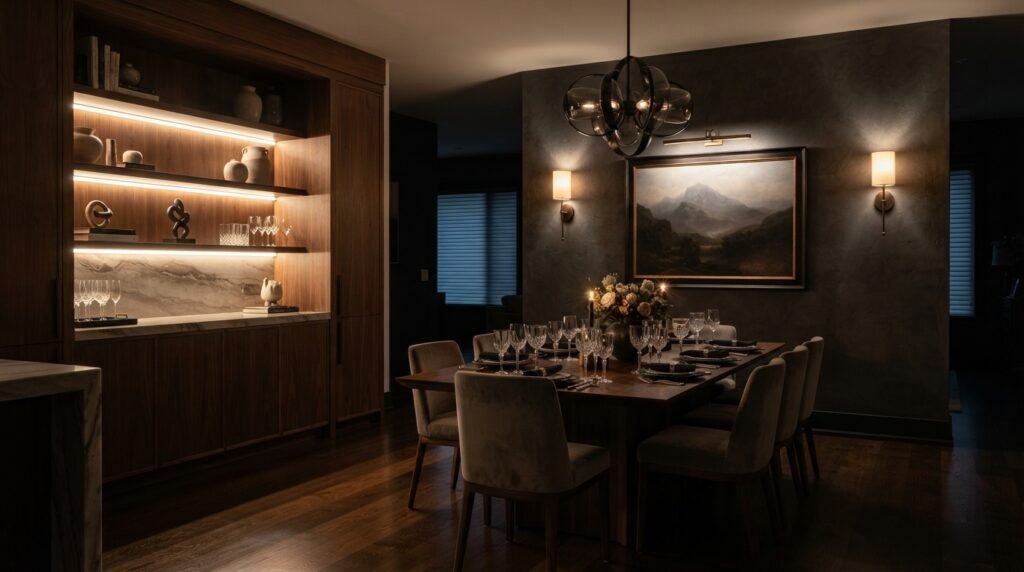
Task Lighting
Usually minimal unless the room doubles as a workspace.
Accent Lighting
- Buffet lamps
- Wall sconces
- Artwork lighting
Warm lighting encourages comfortable dining experiences.
Choosing the Right Color Temperature
Light bulbs are available in different color temperatures.
This affects how a room feels.
Warm White (2700K–3000K)
Creates:
- Warmth
- Comfort
- Relaxation
Best for:
- Living rooms
- Bedrooms
- Dining rooms
Neutral White (3500K–4000K)
Creates:
- Balanced brightness
Best for:
- Kitchens
- Bathrooms
- Hallways
Cool White (5000K+)
Creates:
- Crisp visibility
Best for:
- Garages
- Workshops
- Utility rooms
Most homes feel more welcoming with warm white lighting in living areas.
How Lighting Enhances Color
Lighting affects every color in your home.
For example:
Warm lighting makes:
- Beige appear richer
- Wood appear warmer
- Earth tones appear cozier
Cool lighting makes:
- Blue appear brighter
- White appear cleaner
- Gray appear cooler
Always evaluate paint colors under your intended lighting conditions.
How Lighting Highlights Texture
Lighting brings texture to life.
It enhances materials such as:
- Wood grain
- Stone
- Brick
- Woven baskets
- Linen fabrics
- Decorative wall panels
Side lighting often reveals texture more effectively than overhead lighting alone.Interior designers recommend layered lighting because it adds depth and visual interest to any space.
Common Layered Lighting Mistakes
Relying on One Ceiling Light
A single overhead fixture often creates harsh shadows and an uninviting atmosphere.
Ignoring Task Lighting
Reading, cooking, or working without focused lighting can cause eye strain.
Overusing Bright White Bulbs
Very cool lighting may feel harsh in living spaces.
Choose warmer bulbs for areas intended for relaxation.
Forgetting Dimmers
Dimmer switches provide flexibility and help create different moods.
Uneven Light Distribution
Avoid placing all light sources in one area of the room.
Distribute lighting evenly for better balance.A well-designed layered lighting plan makes living rooms, bedrooms, and kitchens feel more inviting.
Quick Lighting Checklist
Before finishing a room, ask yourself:
✅ Do I have general ambient lighting?
✅ Is there enough task lighting for daily activities?
✅ Have I highlighted important decorative features?
✅ Is the light color appropriate for the room?
✅ Can I adjust brightness using dimmers?
If the answer is yes, your lighting plan is likely well balanced.
How Layered Lighting Works With Home Decor
Lighting is most effective when combined with:
- A cohesive color palette
- Appropriate furniture placement
- Balanced proportions
- Natural textures
- Thoughtful wall decor
Together, these elements create a home that feels comfortable and professionally designed.
For additional guidance, read:
- What Is Home Decor? A Complete Beginner’s Guide
- Choosing Decor Based on Room Size
- Texture in Home Decor: How Wood, Metal, Fabric, and Other Materials Transform a Space
- How to Create a Cohesive Look Across Your Home
- How Natural Light Changes Color in Your Home
Use Better Homes & Gardens because it’s highly relevant.
Better Homes & Gardens lighting guide
These guides will help you understand how lighting works alongside every other aspect of interior design.The key to successful layered lighting is combining different light sources instead of relying on one ceiling fixture.
The Bottom Line
Great lighting is about much more than making a room bright. It shapes mood, improves functionality, highlights your home’s best features, and brings your decor to life.
By combining ambient, task, and accent lighting, you can create rooms that are comfortable, practical, and visually appealing throughout the day and into the evening.
Remember, the goal isn’t simply to add more light—it’s to add the right light in the right place.Whether you’re renovating or decorating, layered lighting can completely transform your home’s atmosphere.
Pingback: How to Choose the Right Light Fixtures for Every Room: A Complete Home Lighting Guide – Modern & Trendy Home Decor Vibes